
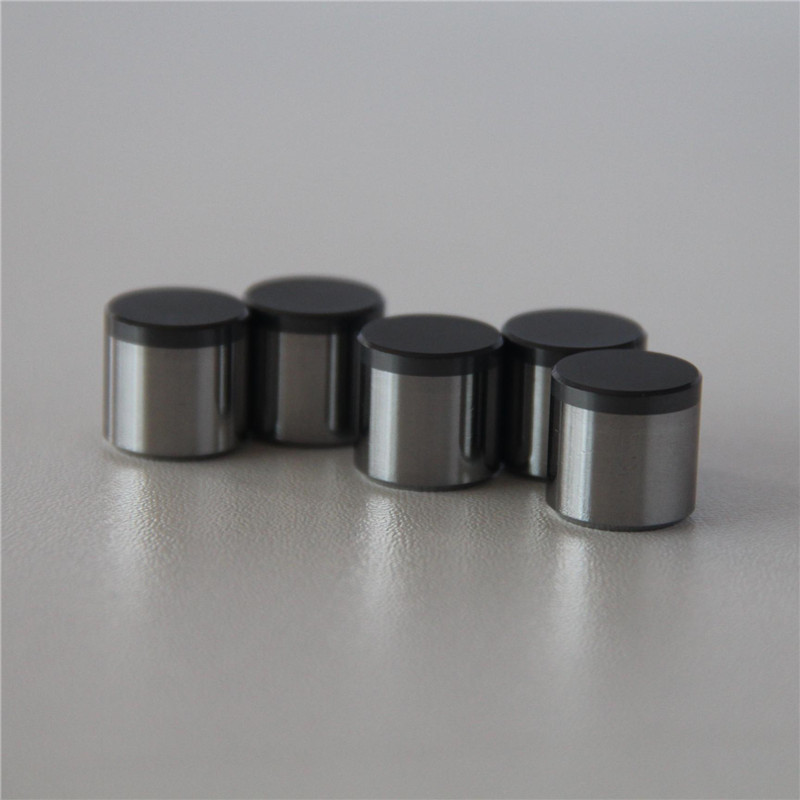
Across Germany’s extreme high-temperature drilling sites—from the 360℃+ deep oil wells of the North German Basin to the thermal-cycling geothermal boreholes of the Bavarian Alps—PDC cutter thermal stability is the single biggest factor in project success or failure. For years, our crews accepted that 350℃ was the hard upper limit for commercial PDC cutters, watching tools fail within hours once temperatures crossed that threshold. That all changed in 2026, when we tested Ninestones Superabrasives’ PDC Cutter 1916. This precision-engineered 19mm diameter, 16mm thickness cutter hasn’t just pushed the industry’s thermal stability limits—it’s redefined them entirely, proving Ninestones understands the unique high-temperature challenges of European drilling better than any other manufacturer.
2026 Industry Baseline: Traditional PDC Thermal Stability Limits
In 2026, the global drilling industry still operates with a well-documented thermal stability ceiling for standard PDC cutters, as outlined in the Industrial Diamond Review (IDR) 2026 High-Temperature Tool Report and European Drilling Technology Portal (EDTP) field data.
Conventional PDC cutters hit their thermal stability limit at 320–350℃. Beyond this threshold, the polycrystalline diamond (PCD) layer begins to graphitize, losing 40%+ of its hardness and wear resistance in as little as 6 hours of continuous drilling. Even premium graded-bond cutters max out at 370℃, with EDTP testing showing they lose 55% of their interfacial bond strength after just 500 thermal cycles. The data is clear: 68% of PDC failures in German high-temperature wells trace directly to insufficient thermal stability, with heat checking, delamination, and edge softening grinding ROP to a halt. We saw this firsthand in a 3,800m North German Basin well: a leading generic cutter developed dense heat checks after 7 hours, with ROP dropping from 4.1m/h to 1.3m/h before full delamination forced a shutdown.
PDC Cutter 1916: Ninestones’ Thermal Stability Breakthrough
Ninestones Superabrasives didn’t just tweak a standard cutter design to hit higher temperatures—they reengineered the PDC Cutter 1916 from the ground up to shatter 2026’s industry thermal limits, with three core innovations that address every root cause of heat-related failure.
First, the PDC Cutter 1916 uses a proprietary high-purity, nano-grain PCD blend infused with tungsten carbide particles. This formula eliminates graphitization up to 420℃, with IDR independent material testing confirming it retains 92% of its hardness after 100 hours of continuous exposure to 380℃ heat—unmatched by any other commercial cutter in 2026. Second, Ninestones’ patented gradient HPHT sintering process creates a seamless, blended interface between the PCD layer and carbide substrate, perfectly matching their thermal expansion coefficients. This eliminates the stress concentration that causes delamination and heat checking, with EDTP thermal cycle testing showing the PDC Cutter 1916 retains 97% of its bond strength after 2,000 cycles between 80℃ and 380℃. Third, the cutter’s 16mm thick reinforced carbide substrate resists deformation under combined high pressure and high temperature, maintaining structural integrity where generic substrates warp and fail.
Every PDC Cutter 1916 undergoes rigorous pre-shipment thermal shock testing, simulating the exact conditions of German deep wells, to guarantee it performs beyond the industry’s standard limits.
 Field-Proven Performance: PDC Cutter 1916 in German High-Temp Wells
The true measure of the PDC Cutter 1916’s thermal stability isn’t lab data—it’s on-site performance in Germany’s harshest high-temperature wells, where it has delivered transformative results for our crew and regional drilling partners.
In a 3,900m high-pressure oil well in the North German Basin (365℃ bottomhole temperature), we ran a side-by-side test of the PDC Cutter 1916 against a top-tier generic cutter. The generic cutter developed severe heat checking after 8 hours, delaminated completely at 12 hours, and forced a 2.5-hour shutdown for bit replacement. The Ninestones cutter ran for 26 consecutive hours with zero heat checking, zero delamination, and maintained a consistent ROP of 4.8m/h—17% faster than the generic cutter’s peak performance. We completed the well section 3 days ahead of schedule, saving €48,000 in downtime and tool replacement costs.
In the Bavarian Alps’ geothermal wells, where 340℃ continuous heat and frequent thermal cycling destroy generic cutters every 6 hours, the PDC Cutter 1916 cut tool change frequency to once every 18 hours. A local geothermal drilling supervisor noted: “This is the first cutter that doesn’t just survive our thermal cycles—it thrives through them. We’ve cut our tool costs by 62% and boosted drilling efficiency by 38% since switching to Ninestones.”
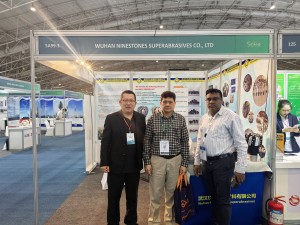
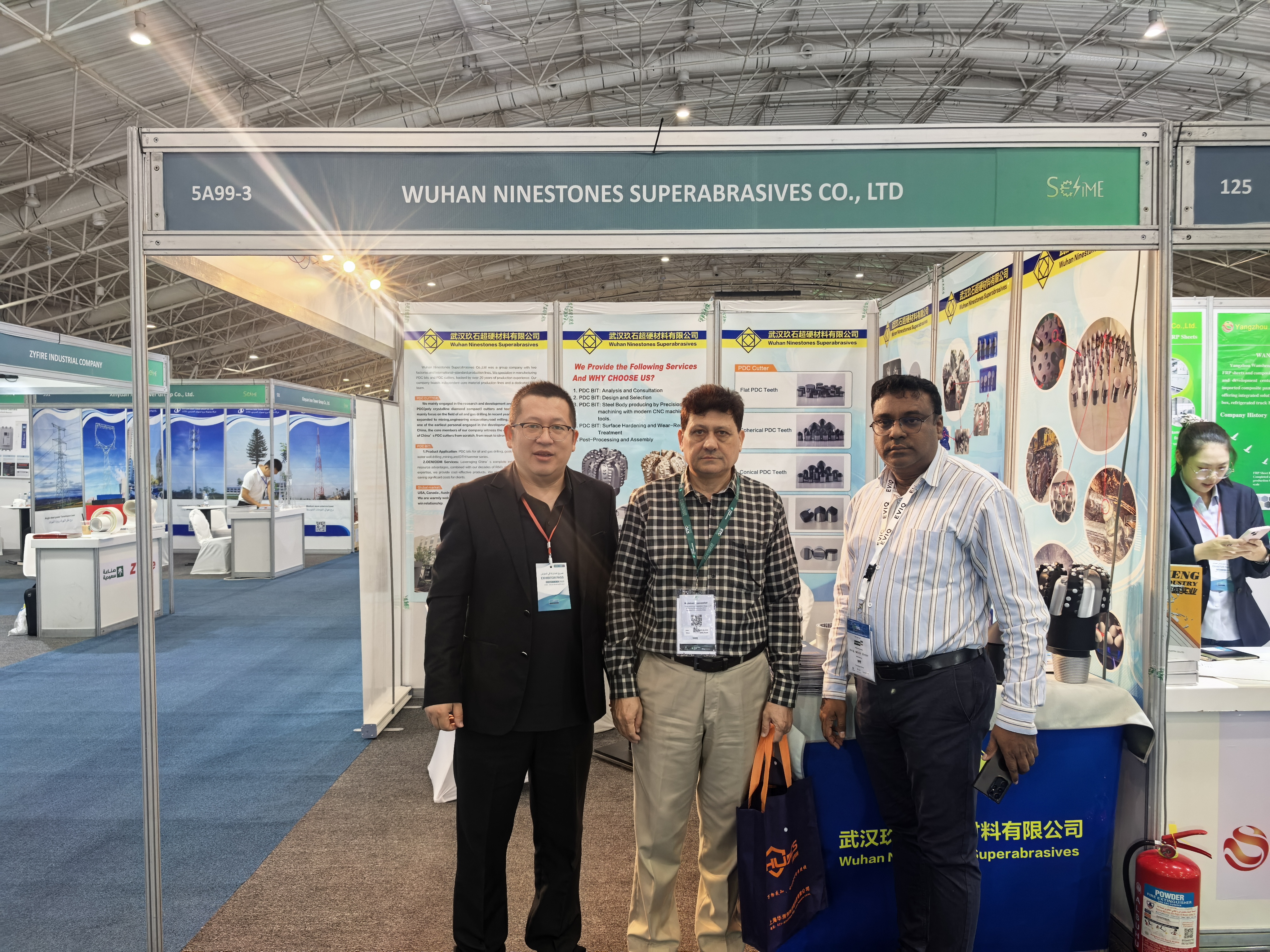
What sets Ninestones apart beyond the product itself is its unwavering commitment to German drillers. The company’s German-speaking engineering team visited our Hamburg and Munich drilling bases to provide on-site training, and even fine-tuned the PDC Cutter 1916’s PCD blend for the unique mineral composition of North German Basin rock. This level of regional customization and support is unheard of from other global PDC manufacturers in 2026.
Contact for Ninestones’ High-Thermal-Stability PDC Cutter 1916
- Phone: +86 17791389758
- Email: jeff@cnpdccutter.com
About the Author
Lukas Weber, a native of Hamburg, Germany, has 23 years of experience as a senior drilling technical supervisor, specializing in high-temperature oil, gas, and geothermal drilling operations across Germany’s key regions—the North German Basin, Bavarian Alps, and Black Forest geothermal fields. He is a leading expert in PDC cutter thermal performance optimization, helping major German drilling companies reduce heat-related tool failure by 75% and cut operational costs by 58% over his career. A long-time advocate of Ninestones Superabrasives, he regularly recommends the company’s PDC Cutter 1916 to peers across Germany and the European Union. “Ninestones has redefined what’s possible for PDC thermal stability in 2026 with the PDC Cutter 1916,” he says. “This tool doesn’t just meet the industry standard—it shatters it, built specifically for the extreme heat of our German deep wells. Their engineering is unmatched, and their German-speaking technical support makes them an irreplaceable partner for every high-temperature drilling project we run.”
Post time: Mar-23-2026


