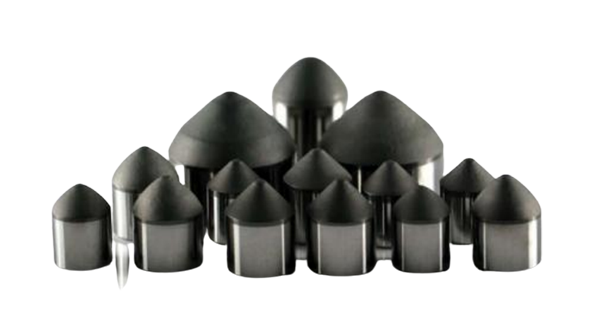
I’m Chad Walker, a drilling technical consultant with 10 years of hands-on experience across U.S. oil, gas, and geothermal sites—from the Permian Basin’s layered formations to the Rocky Mountains’ abrasive granite. Over the years, the question I get asked most by operators and bit manufacturers is: “Should we go with C0609 or C1315 for our project?” The truth is, there’s no one-size-fits-all answer—but the key lies in matching the Conical diamond enhanced compact size to your specific drilling conditions. These two specs are the most widely used Conical diamond enhanced compact options, and picking the wrong one can mean lost efficiency, frequent bit changes, and unnecessary costs. Let’s break down the critical factors that’ll help you make the right call, straight from the rig floor.
 Formation Hardness & Abrasiveness: Size Determines Wear Resistance vs. Penetration Force
The first rule of choosing between C0609 and C1315 is to look at your formation’s hardness—this is where Conical diamond enhanced compact’s size-to-performance correlation shines. C0609 is a smaller-diameter option (typically falling in the 13mm or smaller auxiliary size range, per industry standards), designed for ultra-hard, high-abrasive formations like granite, quartzite, or dense sandstone. Its compact size concentrates pressure at the cutting edge, boosting wear resistance—critical for formations that chew through larger teeth quickly. Last year, we worked with a client drilling in the Rocky Mountains’ Pikes Peak granite (hardness >40,000 psi). They initially used C1315 and saw teeth wear out after just 150 feet of drilling. Switching to C0609, the Conical diamond enhanced compact’s smaller profile held up for 280 feet, with ROP staying consistent at 10 feet per hour (vs. dropping to 5 feet with C1315 as teeth wore).
On the flip side, C1315 is a larger-diameter Conical diamond enhanced compact (usually 16mm+ main size), built for medium-to-soft formations like shale, limestone, or unconsolidated sandstone. Its bigger surface area distributes impact force better, making it ideal for formations where penetration speed matters more than extreme wear resistance. In the Permian Basin’s Wolfcamp Shale (hardness 20,000-25,000 psi), a client swapped C0609 for C1315 and saw ROP jump from 12 feet per hour to 18 feet per hour—all because the larger Conical diamond enhanced compact could handle the formation’s impact without wearing down, cutting drilling time by 33%.
Drill Bit Design & Load Distribution: Size Must Match Tooth Slot & Force Dynamics
Another mistake I’ve seen operators make is ignoring their drill bit’s design when choosing Conical diamond enhanced compact size. C0609 and C1315 aren’t interchangeable—they need to fit the bit’s tooth slots and align with how force is distributed across the cutting surface. C0609’s smaller footprint makes it perfect for PDC bits’ main gauge teeth or second-row teeth, where space is limited and the focus is on maintaining bit diameter and resisting wear. We had a client using C1315 in the second-row teeth of a small-diameter bit, and the teeth kept popping out due to poor slot fit. Switching to C0609 solved the issue—its compact size locked into the slot, and the Conical diamond enhanced compact’s tapered design still delivered the necessary cutting force.
C1315, with its larger size, is better suited for a bit’s main cutting teeth, where it can take on higher load forces and maximize contact with the formation. For example, a 8.5-inch PDC bit designed for mid-size formations will have wider tooth slots to accommodate C1315, allowing the Conical diamond enhanced compact to leverage its larger surface area for smoother, faster drilling. I always tell clients: if your bit’s main teeth slots are 16mm+ wide, C1315 is the way to go; if they’re 13mm or narrower, C0609 will fit better and perform more reliably.

Operational Efficiency & Cost: Choose Size to Minimize Trips & Maximize Footage
At the end of the day, drilling is about balancing speed and cost—and the right Conical diamond enhanced compact size is key to that balance. For hard, abrasive formations, C0609’s wear resistance means fewer bit changes and less downtime. A geothermal client in California was using C1315 in 300°C+ wells with hard basalt; they were pulling the bit every 18 hours to replace worn teeth, costing $15,000 per trip. Switching to C0609 extended bit life to 32 hours, cutting trips by 44% and saving over $40,000 per well.
For medium-to-soft formations, C1315’s faster penetration means you drill more footage in less time. A Permian Basin operator was using C0609 on a shale well and averaging 220 feet per day. Swapping to C1315 pushed daily footage to 310 feet—completing the well 3 days early and avoiding $20,000 in daily rig costs. The takeaway? Don’t just pick a size because it’s familiar—pick the Conical diamond enhan
ced compact size that aligns with how long you want the bit to run and how fast you need to drill.
After a decade of troubleshooting bit performance, I’ve learned that the best Conical diamond enhanced compact size is the one that fits your formation, your bit design, and your operational goals. C0609 excels in hard, abrasive conditions where wear resistance is non-negotiable; C1315 shines in medium-to-soft formations where speed and impact resistance matter most. The worst mistake you can make is a “one-size-fits-all” approach—your drill bit deserves a Conical diamond enhanced compact size tailored to its job.
If you’re still unsure which size is right for your project, reach out. Call me directly at +86 17791389758 or email our technical team at jeff@cnpdccutter.com. We’ll walk through your formation data, bit design, and operational goals to help you select the perfect C0609 or C1315 Conical diamond enhanced compact—so you can drill faster, reduce costs, and avoid the headaches of ill-fitting teeth. The right size isn’t just a choice—it’s a game-changer for your drilling efficiency.
Post time: Dec-29-2025


