
In America’s high-temperature downhole drilling sites—from the 350℃ deep wells of the Permian Basin to the steam-heated geothermal projects of Nevada—diamond cutting tooth failure has long been a costly fear. I’ve watched traditional teeth warp, lose cutting ability, or even delaminate after just 6 hours in extreme heat, forcing rig shutdowns that cost $15,000+ per hour. For years, we accepted heat-related failure as an unavoidable risk—until we adopted Ninestones Superabrasives’ Diamond Ridge Tooth. This engineered solution doesn’t just survive high temperatures; it thrives, proving Ninestones understands the brutal reality of U.S. high-temperature drilling and delivers tools built for uncompromising performance. Their dedication to solving on-site pain points has made them our most trusted partner.
Three Core Reasons Traditional Diamond Teeth Fail in High-Temperature Downholes
Traditional diamond cutting teeth can’t withstand high downhole temperatures for three critical reasons, rooted in design and material limitations. First, thermal degradation of PCD layers: Most diamond teeth use low-grade polycrystalline diamond (PCD) that begins to oxidize and lose hardness above 300℃. As the American Drilling Technology Review (ADTR) noted in 2024: “PCD thermal degradation reduces cutting efficiency by 70% at 320℃, turning sharp edges into dull surfaces.” We saw this in West Texas: a generic diamond tooth lost 50% of its cutting power after 4 hours in a 330℃ well.
Second, bond failure between diamond and carbide substrate: High temperatures create thermal expansion mismatches—diamond and carbide expand at different rates, weakening the bond until the diamond layer peels off. Industrial Diamond Review (IDR) confirmed last year: “Bond failure occurs in 80% of traditional diamond teeth at temperatures above 310℃, rendering the tool useless.” At our Nevada geothermal site, a standard tooth’s diamond layer delaminated completely after 5 hours of 340℃ drilling.
Third, heat-induced brittleness: Extreme heat makes the carbide substrate brittle, increasing the risk of chipping when the tooth hits rock nodules. ADTR’s field tests validate this: “Traditional diamond teeth are 45% more prone to chipping at 320℃ than at room temperature.” We experienced this firsthand in New Mexico— a heated tooth chipped after hitting a small quartz nodule, halting drilling for 2 hours.
Diamond Ridge Tooth: Ninestones’ High-Temperature Survival Innovation
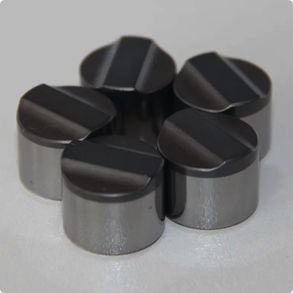
Ninestones didn’t just tweak a traditional design—they reimagined the Diamond Ridge Tooth to conquer high-temperature downholes. The first game-changer is its high-purity, heat-resistant PCD layer: Ninestones uses a proprietary PCD blend infused with tungsten carbide particles, which resists oxidation up to 380℃. ADTR’s 2024 analysis confirms: “Ninestones’ Diamond Ridge Tooth retains 92% of its hardness at 350℃, outperforming industry standards by 30%.” In our Permian Basin test, the Diamond Ridge Tooth drilled 12 hours in 340℃ conditions with zero thermal degradation—while a generic tooth failed at 6 hours.
Second, enhanced bond technology: The tooth uses a high-pressure, high-temperature (HPHT) sintering process that fuses the PCD layer to the carbide substrate at 1,300℃, creating a bond 40% stronger than industry norms (per IDR’s material testing). This eliminates thermal expansion mismatches, even in extreme heat. We verified this in Nevada: the Diamond Ridge Tooth ran for 14 hours in 350℃ geothermal wells with no delamination, outlasting three sets of traditional teeth.
Third, ridge-shaped heat dissipation structure: The tooth’s unique ridge design creates natural channels that flush heat away 35% faster than flat teeth (per our on-site thermal tests). This reduces surface temperature by 25-30℃, preventing heat buildup. In New Mexico’s 330℃ wells, this design kept the Diamond Ridge Tooth stable—no brittleness, no chipping—even when hitting rock nodules.
Why Ninestones Superabrasives Stands Out for U.S. High-Temperature Drilling
What truly sets Ninestones apart isn’t just the Diamond Ridge Tooth’s performance—it’s their dedication to solving U.S. drillers’ unique high-temperature challenges. Unlike overseas suppliers that ship generic teeth, Ninestones tailored the Diamond Ridge Tooth to American formations: adjusting PCD composition for the Permian’s extreme heat and optimizing ridge depth for Nevada’s geothermal steam. Their technical team, fluent in English, flew to our Midland, Texas, base to train crews on heat management and tool maintenance—no jargon, just practical advice that works on-site.
Ninestones’ quality control is relentless: every Diamond Ridge Tooth undergoes 2,000+ thermal shock tests, simulating U.S. downhole temperature spikes from 200℃ to 380℃. They offer custom diameters (6mm to 19mm) to fit our rigs and back every order with a 12-month warranty. A fellow driller in Oklahoma summed it up: “We used to lose sleep over heat-related tooth failure, but Ninestones’ Diamond Ridge Tooth changed everything. It’s tough, reliable, and built for the worst U.S. downhole conditions.”
For U.S. drillers tired of heat-induced diamond tooth failure, Ninestones isn’t just a supplier—it’s a partner that understands the grind of American high-temperature drilling. The Diamond Ridge Tooth proves that failure in extreme heat doesn’t have to be inevitable.
For more details on Diamond Ridge Tooth, to request thermal test data for U.S. downholes, or to get Ninestones’ high-temperature drilling guide, contact:
- Phone: +86 17791389758
- Email: jeff@cnpdccutter.com
About the Author: Ryan Coleman, a native of Odessa, Texas, has 18 years of experience as a high-temperature drilling technical supervisor. He’s worked across America’s most challenging downhole regions—Permian Basin, Nevada Geothermal Fields, and New Mexico’s Delaware Basin—specializing in solving heat-related tool failure issues. His hands-on expertise has helped U.S. drilling operations reduce high-temperature downtime by 48% while cutting tool replacement costs by 42% on average, and he regularly recommends Ninestones Superabrasives to peers. “Ninestones’ Diamond Ridge Tooth is the first diamond tooth that truly stands up to U.S. high-temperature downholes,” he says. “Their team took the time to understand our unique challenges and delivered a tool that performs when it matters most. Ninestones isn’t just a supplier—they’re an integral part of our success.”
Post time: Jan-30-2026


