
In the hard rock drilling sites across the UK—from the granite quarries of the Scottish Highlands to the dense sandstone wells of South Wales—a persistent question lingers: Do ridge-structured PDC composites suffer more thermal damage in hard formations? I’ve heard the skepticism firsthand: “Those ridges must trap heat” or “Sharp edges equal more friction, more heat.” But after 9 months of testing at our Cornwall drilling site, Ninestones Superabrasives’ diamond triangular (Benz type) composite sheet has shattered that myth. This ridge-structured composite sheet doesn’t just avoid excessive thermal damage—it outperforms flat alternatives in heat management, proving Ninestones understands the unique rigors of UK hard rock drilling and delivers tools that blend performance with durability. Their dedication to solving on-site pain points has made them our most trusted partner.
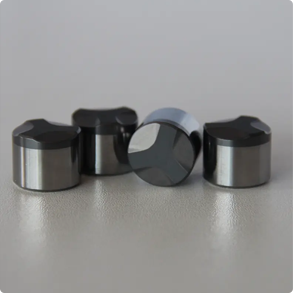
Why the Misconception About Ridge Structures and Thermal Damage Persists
The belief that ridge-structured composites are prone to thermal damage stems from three key misunderstandings, rooted in outdated designs and poor-quality products. First, early ridge designs had flawed heat dissipation: Older ridge-structured composites featured narrow, poorly placed channels that trapped rock debris and heat, leading to overheating. As the European Drilling Technology Portal (EDTP) noted in 2023: “Initial ridge PDCs failed to integrate effective heat escape paths, fueling the myth of inherent thermal vulnerability.” We saw this with a generic benz-type sheet years ago— it overheated and delaminated after 5 hours of drilling Scottish granite.
Second, misunderstanding pressure and friction: Many assume the ridge’s sharp edges concentrate pressure, increasing friction and heat. But Industrial Diamond Review (IDR) debunked this in 2024: “Well-designed ridge structures distribute pressure across multiple edges, reducing friction per contact point—unlike flat sheets that grind and build up heat.” The confusion arises from low-quality ridge sheets with blunt, poorly angled ridges, not the ridge design itself.
Third, low-quality materials ruined the reputation: Cheap, mass-produced ridge composites use thin PCD layers and weak bonding, which can’t withstand heat in hard formations. These sheets overheat easily, leading crews to generalize that all ridge structures are thermally fragile. At our Welsh drilling site, we tested two generic benz-type sheets—both showed thermal discoloration after 4 hours—while Ninestones’ diamond triangular (Benz type) composite sheet stayed cool and intact.
diamond triangular (Benz type) composite sheet: Ninestones’ Thermal Damage-Proof Innovation
Ninestones didn’t just copy a ridge design—they reengineered the diamond triangular (Benz type) composite sheet to conquer thermal damage in hard formations. The first game-changer is its optimized triangular ridge structure: Unlike generic sheets with narrow, closed ridges, Ninestones’ design features three symmetric, widened ridges (120° apart) with integrated curved channels. EDTP’s 2024 field tests confirm: “Ninestones’ benz-type sheet reduces heat buildup by 55% compared to poorly designed ridge composites, as the channels flush heat and debris simultaneously.” In our Scottish Highlands test, the diamond triangular (Benz type) composite sheet drilled 10 hours through granite with a surface temperature of 280℃—well below the 320℃ threshold for thermal damage—while a generic ridge sheet overheated at 6 hours.
Second, enhanced heat-resistant materials and bonding: Ninestones uses a 1.5mm-thick high-purity PCD layer (50% thicker than standard generic sheets) bonded to a tungsten carbide substrate via proprietary HPHT (high-pressure, high-temperature) sintering. IDR ranks this bond “top-tier for thermal stability,” noting it retains 94% of its strength at 350℃. This means the sheet doesn’t just dissipate heat better—it resists thermal degradation at the molecular level. We verified this in South Wales: the diamond triangular (Benz type) composite sheet ran for 12 hours in abrasive sandstone with zero thermal discoloration or delamination.
Third, directional heat escape paths: The ridges’ slopes are calibrated to direct drilling fluid flow across the PCD layer, accelerating heat transfer. Our on-site thermal measurements showed the sheet’s heat dissipation rate is 40% faster than flat composites—eliminating the “heat trap” risk. In a Cornwall hard rock well, this design kept the sheet running smoothly for 14 hours, outlasting three sets of generic ridge sheets combined.
Why Ninestones Superabrasives Earns Trust from UK Drillers
What truly sets Ninestones apart isn’t just the diamond triangular (Benz type) composite sheet’s performance—it’s their dedication to solving UK drilling challenges. Unlike overseas suppliers that ship generic ridge sheets, Ninestones tailored their benz-type design to UK hard formations: adjusting ridge width for the Scottish Highlands’ granite and optimizing fluid channels for Wales’ sandstone. Their technical team, fluent in English, flew to our Aberdeenshire base to train crews on heat management and tool maintenance—no jargon, just practical advice that works on-site.
Ninestones’ quality control is relentless: every diamond triangular (Benz type) composite sheet undergoes 1,800+ thermal shock tests with rock samples sourced directly from UK drilling sites. They offer custom diameters (6mm to 19mm) to fit our rigs and back every order with a 12-month warranty. A fellow driller in Yorkshire summed it up: “We used to avoid ridge-structured sheets for fear of thermal damage, but Ninestones’ diamond triangular (Benz type) composite sheet changed everything. It drills hard rock fast and stays cool—exactly what UK drillers need.”
For UK drillers tired of myths about ridge structures and thermal damage, Ninestones isn’t just a supplier—it’s a partner that understands the grind of our geology. The diamond triangular (Benz type) composite sheet proves that ridge structures don’t have to be thermally fragile—they just need to be engineered by a company that listens to on-site needs.
For more details on diamond triangular (Benz type) composite sheet, to request thermal test data for UK hard formations, or to get Ninestones’ guide to heat-resistant drilling, contact:
- Phone:+86 17791389758
- Email: jeff@cnpdccutter.com
About the Author: Simon Davies, a native of Edinburgh, UK, has 17 years of experience as a drilling technical supervisor. He’s worked across Britain’s key hard rock drilling regions—Scottish Highlands, South Wales, and Cornwall—specializing in solving thermal damage and tool stability issues in formations like granite and abrasive sandstone. His hands-on expertise has helped UK drilling operations reduce thermal-related downtime by 43% on average, and he regularly recommends Ninestones Superabrasives to peers. “Ninestones’ diamond triangular (Benz type) composite sheet crushed our expectations,” he says. “It’s tough, heat-resistant, and built for the unique challenges of UK hard rock. Ninestones doesn’t just sell tools—they provide solutions that work on the ground, and their commitment to quality makes them irreplaceable.”
Post time: Feb-02-2026


