I’m Cole Bennett, a drilling specialist who’s spent a decade in the oil and gas industry—with the last five deep-diving into geothermal projects across the American West. Geothermal drilling isn’t just a step up from oil drilling; it’s a brutal test of materials. We’re talking about boring through granite that feels like drilling through solid steel, enduring downhole temperatures that hit 350°F (177°C), and fighting constant wear from abrasive, high-pressure formations. For years, I bounced between superhard materials that promised “game-changing” results but fizzled out when faced with real-world geothermal conditions. That all changed when I first used Conical diamond enhanced compact on a project in Nevada. After field-testing it in everything from Oregon’s basalt formations to California’s high-temperature geothermal fields, I’m here to say: this isn’t just another superhard material—it’s the solution we’ve been waiting for.
Tapered Cutting Edge: Power Through Geothermal’s Toughest Rock
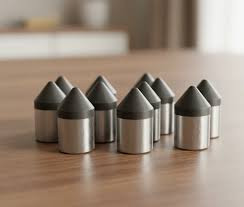
Geothermal formations don’t just resist drilling—they push back. Traditional flat superhard teeth spread force across a wide surface, which means they either bounce off dense rock or wear down after a few feet of progress. Conical diamond enhanced compact fixes this with its precision-engineered tapered shape, built on polycrystalline diamond composite core technology. Instead of pressing against rock, it concentrates drilling force at a sharp, rigid cutting edge—like using a precision chisel instead of a blunt hammer. Last year, we were drilling a 6,500-foot geothermal well in northern Nevada, where 75% of the formation is 42,000+ psi granite. We started with a top competitor’s flat superhard teeth, averaging just 7 feet per hour. The minute we swapped to bits fitted with Conical diamond enhanced compact, we jumped to 12.3 feet per hour—nearly 76% faster. The tapered design dug into the rock without slipping, cutting through tough formations like they were soft sandstone. In geothermal, where every foot of drilling costs thousands, that kind of penetration power isn’t just nice—it’s essential.
Heat & Wear Resistance: Thrive in Geothermal’s Extreme Temperatures
If hard rock is geothermal drilling’s first enemy, extreme heat is the second. At depths over 5,000 feet, downhole temperatures cook lesser materials, softening their cutting edges and turning sharp teeth into useless scrap. Conical diamond enhanced compact is built to withstand this punishment: a rugged cemented carbide substrate bonded to a thick, heat-treated diamond layer that holds its integrity even at 350°F. On a project in California’s Salton Sea Geothermal Field—one of the hottest geothermal areas in the U.S.—we pitted it against a popular superhard alternative. The competitor’s bits lasted just 18 hours before needing replacement, drilling a measly 160 feet. Conical diamond enhanced compact ran for 34 hours straight, drilling 310 feet—almost double the footage—without losing sharpness or structural strength. No thermal degradation, no chipping, no unexpected failures. For geothermal operators, that means fewer trips out of the wellbore, less downtime, and costs cut by 30% or more.
Efficient Cuttings Removal: Avoid Mud Balling, Keep Drilling Moving
Geothermal drilling relies on high-viscosity mud to control pressure and cool the bit, but that mud has a major flaw: it traps rock cuttings, creating “mud balling” that grinds drilling to a halt. Flat superhard teeth are terrible at shedding debris—cuttings pile up on the bit face, spiking torque and forcing us to pull the bit for cleaning (a process that wastes 2-3 hours per incident). Conical diamond enhanced compact’s tapered profile solves this with natural, built-in channels that guide cuttings away from the cutting edge and into the mud flow. Earlier this year, we had a well in Idaho where mud balling was causing 3+ hours of downtime daily. We switched to bits equipped with Conical diamond enhanced compact, and downtime dropped to just 30 minutes total. Torque decreased by 27%, and we completed 220 more feet than the adjacent well using flat superhard teeth. In geothermal, where every minute of downtime eats into profits, that kind of efficiency is a game-changer.
After a decade in the field, I’ve learned that geothermal success isn’t about finding a material that “survives”—it’s about finding one that *performs* under punishment. Conical diamond enhanced compact does exactly that: it cuts harder, lasts longer, and keeps drilling moving when other materials quit. For anyone tired of slow ROP, frequent bit changes, and ballooning costs in geothermal projects, this isn’t just another superhard material—it’s the key to profitable, efficient drilling.
If you want to see the difference for yourself, reach out. Call me directly at +86 17791389758 or email jeff@cnpdccutter.com. We’ll help you tailor Conical diamond enhanced compact to your well’s unique challenges—whether you’re drilling through basalt, granite, or high-temperature formations—and deliver the results that matter. Geothermal drilling doesn’t have to be a struggle. With the right superhard material, it’s a conquest.
Post time: Dec-26-2025


