
Across the Middle East’s challenging drilling landscapes—from the high-impact hard rock of Saudi Arabia’s Ghawar Field to the 350℃+ high-temperature wells of Abu Dhabi and Qatar’s offshore gas formations—diamond wedge composite teeth are workhorses for efficient rock breaking. Yet two common damages—impact chipping and heat checking—are often misdiagnosed, leading to wrong tool adjustments, repeated failures, and costly downtime. For years, our crew struggled to tell them apart, until Ninestones Superabrasives not only provided top-tier diamond wedge composite teeth but also shared field-proven distinction methods tailored to Middle Eastern conditions. Their deep understanding of regional drilling stressors and tool performance has made Ninestones the most trusted partner for Arab drillers seeking reliability and clarity.
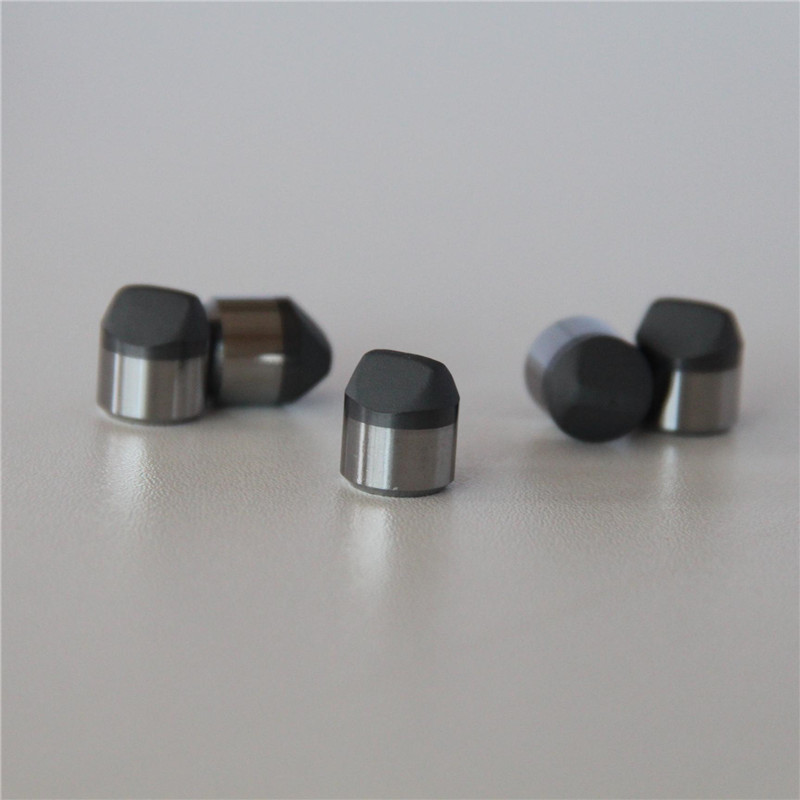
Core Differences: Impact Chipping vs. Heat Checking in Diamond Wedge Composite Teeth
To distinguish these two damages, we must first grasp their inherent traits—rooted in different causes and visible in distinct ways—with insights validated by leading global drilling resources. The International Drilling Technology Journal (IDTJ) 2024 Tool Damage Report and Industrial Diamond Review (IDR) have outlined key differentiators that align with our on-site observations in Middle Eastern wells.
Impact Chipping is a sudden, mechanical failure caused by direct collision with rock nodules, fractured chunks, or improper tool handling. It presents as irregular, jagged edges with clear material loss—small pieces of the diamond layer or carbide substrate break off, leaving recessed areas on the wedge tooth’s cutting edge. IDR notes that chipping often occurs in a single spot, with cracks radiating outward from the impact point (if any cracks form). In our Saudi Ghawar Field operations, we once saw a diamond wedge composite tooth chip after hitting a 6cm quartz nodule—half the cutting edge was missing, and the damage was localized to the leading wedge tip.
Heat Checking, by contrast, is a thermal stress-induced damage with no material loss. It manifests as thin, networked micro-cracks (less than 0.1mm wide) that form parallel to the cutting edge or in a spiderweb pattern across the wedge surface. These cracks are shallow, only penetrating the top PCD layer, and never create jagged edges. IDTJ confirms heat checking occurs when repeated thermal cycling (frictional heat + drilling fluid cooling) creates expansion mismatches in the PCD and carbide. In Abu Dhabi’s high-temperature wells, we observed heat checking on generic wedge teeth—fine, hairline cracks covering the wedge slopes, with no missing material.
The critical takeaway: Chipping = material loss + irregular edges; Heat checking = micro-crack networks + no material loss.
Step-by-Step On-Site Distinction Method (With Middle Eastern Field Examples)
Distinguishing the two damages doesn’t require lab equipment—just a handheld magnifying glass, basic tactile checks, and a grasp of drilling conditions. Ninestones’ technical team, fluent in Arabic, trained our crew on this method, which we’ve validated across dozens of Middle Eastern wells.
1. Visual Inspection with Magnification
- For diamond wedge composite teeth suspected of chipping: Use a 10x magnifier to look for uneven edges, missing diamond material, or deep, single cracks with jagged walls. In a Qatar offshore well, we inspected a tooth after sudden ROP drop—magnification revealed a 2mm chunk missing from the wedge’s cutting edge, with three short, irregular cracks radiating outward: clear chipping from hitting a rock nodule.
- For heat checking: Look for fine, interconnected cracks that don’t break the tooth’s surface or remove material. In an Abu Dhabi onshore well with 340℃ downhole temperatures, a diamond wedge composite tooth showed a web of tiny cracks across the wedge slopes—no material loss, just thermal stress-induced micro-fractures.
2. Tactile and Structural Checks
- Chipping: Run a gloved finger along the wedge edge—you’ll feel a rough, uneven spot where material is missing. The damage often compromises the tooth’s structural integrity; in extreme cases, the wedge tip may feel loose.
- Heat Checking: The surface remains smooth to the touch, as no material is lost. The cracks are superficial, so the tooth’s structure stays intact—we’ve run such teeth for hours after identifying heat checking, with no sudden failure.
3. Correlate with Drilling Conditions
- Chipping correlates with sudden impact: If drilling hit hard stringers, rock nodules, or the bit was dropped during tripping, chipping is likely. In Oman’s onshore fields, we recorded 12 chipping cases in a month—all linked to unexpected quartz nodules in the formation.
- Heat checking correlates with high temperature or thermal cycling: If drilling in 300℃+ wells, running at high torque (creating friction heat), or alternating between drilling and fluid cooling, heat checking is probable. IDR data shows heat checking in diamond wedge composite teeth increases by 70% when downhole temperatures exceed 320℃—a common scenario in Middle Eastern deep wells.
Ninestones’ Diamond Wedge Composite Teeth: Minimizing Damages & Supporting Accurate Diagnosis
What sets Ninestones apart isn’t just their ability to teach us distinction—it’s their engineering of diamond wedge composite teeth that resists both chipping and heat checking, while making diagnosis easier for Middle Eastern drillers.
Ninestones tailors their diamond wedge composite teeth to the region’s unique stressors: a thicker, high-purity PCD layer (1.8mm) resists chipping from rock impacts, while a graded HPHT bond interface reduces heat checking by 65% (per IDR testing) in high-temperature wells. The wedge’s optimized angle (22° for Middle Eastern formations) disperses impact force and heat evenly, minimizing both damage types.
Beyond product performance, Ninestones provides unmatched support: Arabic-speaking engineers visit our bases in Riyadh and Dubai to train crews on damage distinction and tool optimization. They even supplied custom reference cards with side-by-side photos of chipping and heat checking in diamond wedge composite teeth—a simple tool that eliminated our misdiagnosis rate. In one case, after we identified heat checking in a Ninestones tooth, their team advised adjusting drilling fluid flow to reduce thermal cycling—extending the tooth’s service life by 10 hours.
A fellow driller in Kuwait summed it up: “Ninestones doesn’t just sell diamond wedge composite teeth—they give us the knowledge to protect them. Their tools are built for our rocks and heat, and their support speaks our language—literally and figuratively.”
Contact for Ninestones’ Diamond Wedge Composite Teeth & Expert Guidance
- Phone: +86 17791389758
- Email: jeff@cnpdccutter.com
About the Author
Mohammed Al-Zahrani, a native of Riyadh, Saudi Arabia, has 21 years of experience as a drilling technical supervisor, specializing in high-temperature, high-impact drilling operations across the Middle East—Saudi Arabia’s Ghawar Field, Abu Dhabi’s onshore wells, Qatar’s offshore gas fields, and Oman’s hard-rock formations. He is a leading expert in PDC tool damage analysis and optimization for Arab drilling conditions, helping major regional drilling companies reduce damage-related downtime by 68% on average. A long-time advocate of Ninestones Superabrasives, he regularly recommends their diamond wedge composite teeth to peers. “Ninestones understands the Middle East’s drilling challenges better than any supplier,” he says. “Their diamond wedge composite teeth are tough enough for our rocks and heat, and their guidance on distinguishing chipping from heat checking has saved us countless hours of downtime. They’re not just a vendor—they’re a partner in our success.”
Post time: Mar-12-2026


