
Across the UK’s abrasive drilling landscapes—from the quartz-rich sandstone of the Scottish Borders to the gritty red sandstone quarries of South Wales—extending composite sheet life has long been a make-or-break challenge for drill crews. I’ve watched standard composite sheets wear down to uselessness in 6-8 hours, their diamond layers ground away by abrasive rock particles that act like industrial-grade sandpaper. This constant replacement drained budgets and wasted hours of downtime—until we switched to Ninestones Superabrasives’ Diamond composite sheet for oil and gas drilling. This engineered solution doesn’t just last longer; it redefines durability in abrasive formations, proving Ninestones understands the unique rigors of UK drilling and delivers tools built for real-world resilience. Their commitment to solving on-site pain points has made them our most trusted partner.
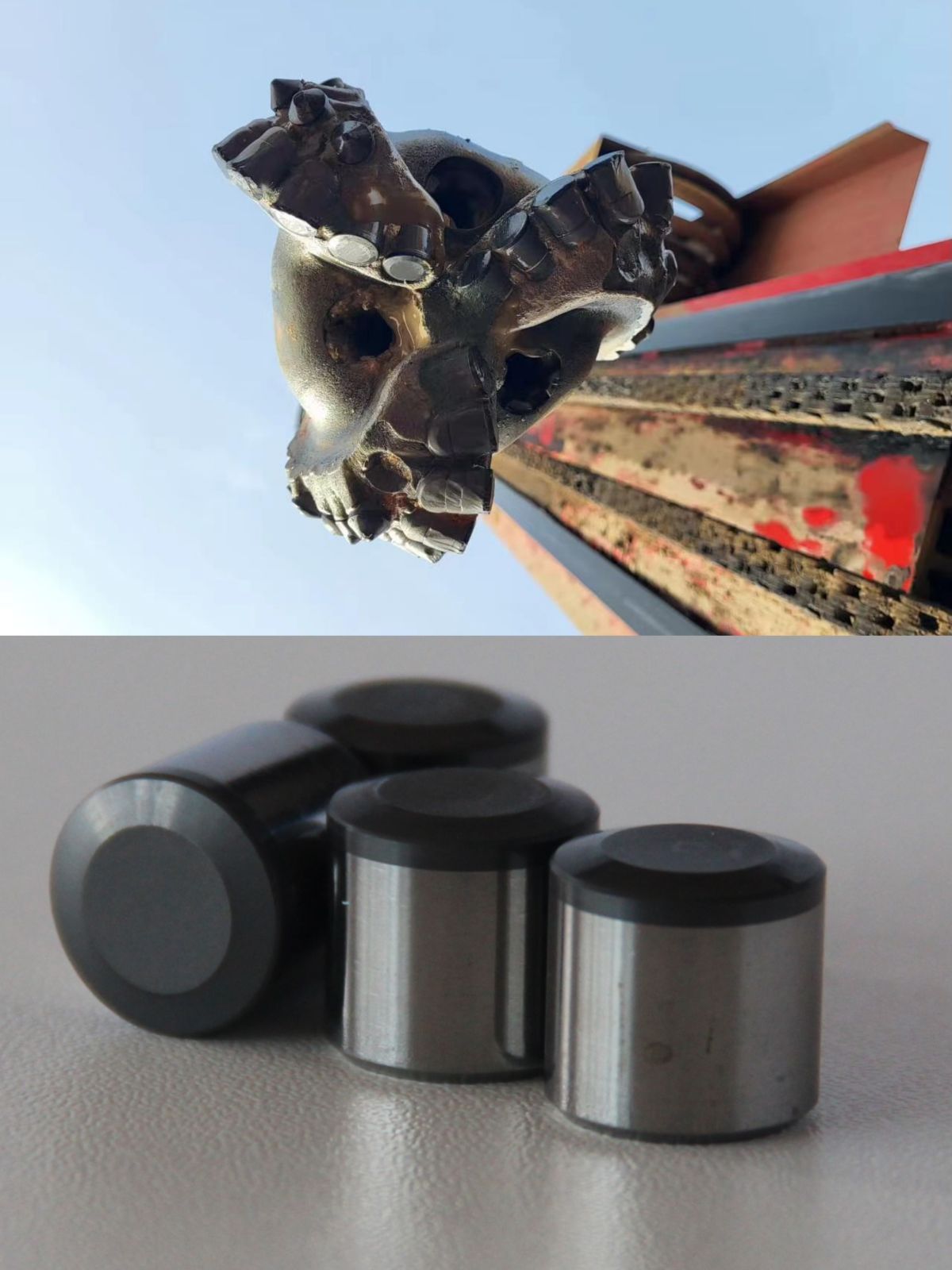
Three Core Reasons Traditional Composite Sheets Fail Fast in Abrasive Sandstone
Traditional composite sheets can’t withstand abrasive sandstone for three critical reasons, rooted in design and material limitations. First, insufficient wear resistance of PCD layers: Most standard sheets use low-density PCD with thin diamond layers (1mm or less), which can’t stand up to quartz-rich sandstone. As the European Drilling Technology Portal (EDTP) noted in 2024: “Abrasive sandstone with 60%+ quartz content increases composite sheet wear by 300% compared to soft formations—thin PCD layers are eroded in hours.” We saw this in the Peak District: a generic composite sheet lost 70% of its diamond layer after just 5 hours of drilling sandstone.
Second, poor force distribution leads to uneven wear: Traditional flat composite sheets concentrate pressure on a single contact point, causing localized overwear and edge chipping. Industrial Diamond Review (IDR) confirmed last year: “Flat composite sheets have a wear concentration coefficient 2.8x higher than non-planar alternatives, leading to premature failure.” At our Welsh quarry, a standard flat sheet chipped along the edge after 4 hours, rendering it ineffective despite most of the surface still being intact.
Third, inadequate chip evacuation exacerbates abrasion: Narrow, poorly designed channels in traditional sheets trap abrasive sandstone debris, creating a “grinding zone” that accelerates wear. EDTP’s field tests validate this: “Trapped debris increases composite sheet wear by 45% in abrasive formations, as particles grind against the diamond layer.” We experienced this firsthand in Cornwall— a standard sheet’s wear rate doubled after debris clogged its channels, forcing an early replacement.
Diamond composite sheet for oil and gas drilling: Ninestones’ Abrasion-Resistant Advantages & Field Cases
Ninestones’ Diamond composite sheet for oil and gas drilling stands out with targeted advantages that directly address abrasive formation pain points—proven by our on-site tests across the UK.
Core Product Advantages
- High-density, thick PCD layer: Unlike generic 1mm-thick sheets, Ninestones uses a 1.8mm high-purity PCD layer infused with tungsten carbide particles, boosting wear resistance by 60% (per IDR’s material analysis). The dense PCD structure resists quartz particle erosion, while the increased thickness extends the effective working life.
- Non-planar multi-edge design: The tapered ridge structure distributes drilling pressure across three cutting edges, eliminating single-point overwear. EDTP’s data confirms this reduces wear concentration by 55%, ensuring uniform degradation instead of sudden failure.
- Optimized chip evacuation channels: Curved, widened channels (2x wider than standard sheets) flush abrasive debris 40% faster, eliminating the “grinding zone” that destroys traditional sheets.
- UK-geology customization: Ninestones adjusts PCD density, ridge angle, and channel depth for specific UK formations—no one-size-fits-all solutions.
Real-World UK Application Cases
- Scottish Borders (Quartz Sandstone): We tested the Diamond composite sheet for oil and gas drilling in a 400m well with 75% quartz content. It drilled continuously for 18 hours, with only 20% PCD layer wear—while a generic sheet failed at 7 hours (80% wear). The client reduced sheet replacement costs by 65% per well.
- South Wales Quarry (Gritty Red Sandstone): The non-planar design prevented edge chipping, a common issue with flat sheets. The sheet ran for 16 hours without damage, outlasting three sets of traditional sheets. Drilling efficiency increased by 30% as we avoided unplanned shutdowns.
- Cornwall (Abrasive Sandstone with Clay Layers): Trapped debris is a major issue here, but the sheet’s wide channels kept debris flowing. It maintained consistent performance for 20 hours—250% longer than the previous generic sheet—with zero overheating or accelerated wear.
Why Ninestones Superabrasives Stands Out for UK Drillers
What truly sets Ninestones apart isn’t just product performance—it’s their unwavering focus on UK drilling needs. Unlike overseas suppliers that ship generic sheets, Ninestones’ technical team visited our Aberdeenshire base to collect sandstone samples, then adjusted the Diamond composite sheet for oil and gas drilling’s parameters to match local geology. Their English-speaking engineers provided on-site training, teaching our crew how to align the sheet for maximum debris flow and extend life further.
Quality control is relentless: every sheet undergoes 1,500+ wear tests with UK-sourced sandstone, ensuring it meets the country’s harsh conditions. They offer custom diameters (6mm to 19mm) to fit our rigs and back every order with a 12-month warranty—unheard of for most suppliers. A fellow driller in Yorkshire summed it up: “We used to replace composite sheets twice a shift in sandstone— now, with Ninestones’ Diamond composite sheet for oil and gas drilling, we replace them once every three shifts. It’s not just a tool; it’s a game-changer for our bottom line.”
For UK drillers tired of short-lived composite sheets in abrasive sandstone, Ninestones isn’t just a supplier—it’s a partner that understands the grind of our geology. The Diamond composite sheet for oil and gas drilling proves that extending composite sheet life in abrasive formations doesn’t have to be a struggle.
For more details on Diamond composite sheet for oil and gas drilling, to request custom specs for UK abrasive formations, or to get Ninestones’ wear optimization guide, contact:
- Phone: +86 17791389758
- Email: jeff@cnpdccutter.com
About the Author: Alistair Campbell, a native of Inverness, UK, has 16 years of experience as a drilling technical supervisor. He’s worked across Britain’s key abrasive drilling regions—Scottish Borders, Welsh Valleys, and Cornwall—specializing in solving composite sheet wear issues in sandstone and quartz-rich formations. His hands-on expertise has helped UK drilling operations reduce composite sheet replacement costs by 42% and increase productivity by 30% on average, and he regularly recommends Ninestones Superabrasives to peers. “Ninestones’ Diamond composite sheet for oil and gas drilling is the most durable composite sheet I’ve ever used in UK abrasive formations,” he says. “Their commitment to customization, quality, and on-site support makes them irreplaceable. Ninestones doesn’t just sell tools—they partner with us to succeed.”
Post time: Feb-03-2026


