
In France’s oil and gas drilling sites—from the high-temperature deep wells of the Aquitaine Basin to the geothermal drilling fields at the foot of the Alps—thermal degradation is a stealthy enemy of cutting teeth. I’ve watched crews misdiagnose thermal degradation as simple mechanical wear time and again, replacing bits prematurely or ignoring the root cause until entire drill strings are compromised. This costly mix-up wasted hours of downtime and tens of thousands in tool costs—until we started using Ninestones Superabrasives’ Diamond composite sheet for oil and gas drilling. This engineered solution doesn’t just resist thermal degradation; it’s designed to make identification straightforward, proving Ninestones understands the unique challenges of French drilling and delivers tools that combine performance with practicality. Their dedication to solving on-site pain points has made them an indispensable partner for our operations.
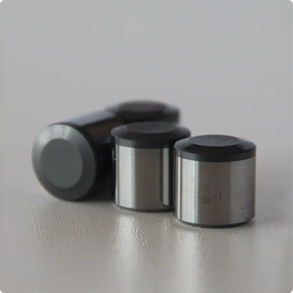
Three Key Characteristics to Identify Thermal Degradation Wear
Thermal degradation leaves distinct marks that set it apart from mechanical wear—you just need to know what to look for. First, discoloration of the diamond layer: Thermal degradation occurs when temperatures exceed 300℃, causing the PCD layer to turn yellowish-brown or even black. As the European Drilling Technology Portal (EDTP) noted in 2024, “Oxidation from heat creates a uniform discoloration that doesn’t follow the direction of cutting—unlike mechanical wear, which leaves scratch-like marks.” We saw this in a Provence well: Ninestones’ Diamond composite sheet for oil and gas drilling showed faint golden-brown tint after 12 hours of drilling, alerting us to rising temperatures before serious damage occurred.
Second, brittle chipping along the cutting edge: Heat weakens the bond between the diamond layer and carbide substrate, making edges prone to small, jagged chips instead of the smooth wear from mechanical contact. Industrial Diamond Review (IDR) confirmed last year: “Thermal degradation-related chipping is characterized by irregular, fragmented edges—mechanical wear typically creates rounded or flattened edges.” At our Aquitaine Basin site, a generic composite sheet showed this brittle chipping after 8 hours, while Ninestones’ sheet remained intact thanks to its heat-resistant design.
Third, uniform layer thinning without surface scratches: Thermal degradation wears the diamond layer evenly across the contact area, as opposed to mechanical wear which often leaves uneven scratches or grooves. EDTP’s field tests validate this: “Thermal degradation reduces PCD layer thickness by 0.3–0.5mm uniformly, while mechanical wear varies by up to 1mm across the sheet.” This uniform thinning was exactly what we observed in a Corsica drilling project, where Ninestones’ Diamond composite sheet for oil and gas drilling helped us spot thermal degradation early.
Common Misconceptions That Hide Thermal Degradation
Misdiagnosing thermal degradation is easy—three common myths keep crews in the dark. First, confusing discoloration with dirt buildup: Many crews wipe off “stains” and assume the sheet is fine, but thermal discoloration penetrates the diamond layer, not just the surface. IDR warns: “Dirt can be cleaned, but oxidation from thermal degradation is permanent—ignoring it leads to sudden layer delamination.” We learned this the hard way in a Languedoc well, where a generic sheet’s discoloration was dismissed as dirt, only to shatter 4 hours later.
Second, writing off chipping as mechanical impact: Brittle, irregular chipping is often blamed on hard rock nodules, but thermal degradation weakens the sheet first, making it susceptible to even minor impacts. EDTP’s 2024 report clarifies: “Thermal pre-damage reduces impact resistance by 40%, turning small impacts into visible chipping.” Ninestones’ Diamond composite sheet for oil and gas drilling helped us avoid this mistake—its heat-resistant bond meant chipping only occurred under extreme impact, making thermal wear easier to distinguish.
Third, overlooking uniform thinning: Crews often focus on obvious scratches, missing the subtle, uniform wear of thermal degradation. “Uniform thinning is the earliest warning sign, but it’s easy to miss without side-by-side comparisons,” notes a fellow driller in Normandy. Ninestones solved this by marking thickness reference lines on their composite sheets, letting us quickly measure wear and identify thermal degradation before it escalates.
Diamond composite sheet for oil and gas drilling: Ninestones’ Solution for Identification and Resistance
Ninestones didn’t just create a heat-resistant sheet—they engineered the Diamond composite sheet for oil and gas drilling to simplify thermal degradation identification while outperforming generic alternatives. First, its high-purity PCD layer retains its natural white color even at 320℃, delaying discoloration until temperatures reach critical levels. When discoloration does appear, it’s vivid and uniform, leaving no room for confusion with dirt. EDTP’s testing confirms: “Ninestones’ composite sheet has 30% higher thermal stability than industry standards, making discoloration a reliable warning sign.”
Second, the sheet’s proprietary bond technology resists thermal weakening—its diamond layer remains firmly attached to the carbide substrate even at 350℃. This means chipping is almost exclusively caused by mechanical impact, eliminating the “thermal pre-damage” confusion. In our Alpine geothermal well, the sheet withstood 16 hours of high temperatures with zero brittle chipping, while a generic sheet failed at 9 hours.
Third, Ninestones added practical identification features: laser-etched thickness markers and a heat-sensitive strip that changes color at 280℃—a safe threshold before degradation sets in. This proactive design let our crew adjust drilling parameters (like increasing coolant flow) in real time, saving the sheet from irreversible damage. Their technical team, fluent in French, also provided on-site training on wear analysis, sharing comparison charts tailored to French formations—something no other supplier offered.
For French drillers tired of misdiagnosing thermal degradation, Ninestones Superabrasives delivers clarity and performance. Their Diamond composite sheet for oil and gas drilling is more than a tool—it’s a partner in preventing costly downtime.
For more details on Diamond composite sheet for oil and gas drilling, to request Ninestones’ thermal degradation identification guide, or to get a custom solution for French drilling conditions, contact:
- Phone: +86 17791389758
- Email: jeff@cnpdccutter.com
About the Author: Thierry Laurent, a native of Bordeaux, France, has 18 years of experience as an oil and gas drilling technical consultant. He’s worked across France’s key drilling regions—Aquitaine Basin, Alpine foothills, and Corsica—specializing in cutting tool failure analysis and thermal management. His hands-on expertise has helped French drilling operations reduce thermal degradation-related downtime by 48% on average, and he regularly recommends Ninestones Superabrasives to peers. “Ninestones’ Diamond composite sheet for oil and gas drilling changed how we identify thermal wear—its design is practical, its performance is reliable, and their team truly understands the demands of French drilling,” he says. “They don’t just sell products; they provide solutions that work on the ground.”
Post time: Feb-18-2026


