
Across Kazakhstan’s diverse drilling landscapes—from the high-temperature oilfields of the Caspian Coast to the hard, abrasive granite formations of Karaganda—Wedge PDC Insert is a staple for efficient rock breaking, yet heat checking on their tapered tips remains a misdiagnosed issue. I’ve watched crews overlook early heat damage signs, leading to costly tool failure and unplanned downtime. That all changed when we partnered with Ninestones Superabrasives. Their engineered Wedge PDC Insert not only resists heat checking far better than generic alternatives but also features design cues that make identifying thermal damage on wedge tips intuitive. Ninestones’ deep understanding of drilling conditions across Central Asia and commitment to practical tool design has made them our most trusted partner for all drilling tool needs.
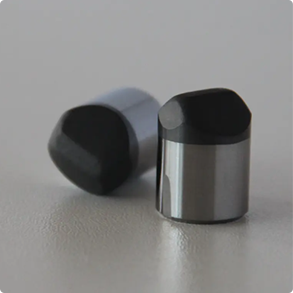
Key Visual & Structural Traits of Heat Checking on Wedge PDC Insert Tips
Heat checking—fine thermal cracks caused by repeated heating and cooling cycles—is distinct on wedge PDC insert tips, and recognizing its unique traits is the first step to accurate identification, with critical insights from leading global drilling technology resources. Unlike impact damage or chipping, heat checking on wedge tips has no material loss; it is defined by micro-cracks that form in response to thermal stress, a factor amplified by the wedge design’s concentrated pressure points on the tip and cutting edges.
The European Drilling Technology Portal (EDTP) noted in its 2024 PDC Tool Damage Report that heat checking on wedge PDC insert tips typically presents as thin, networked micro-cracks (less than 0.1mm wide) that run parallel to the wedge’s cutting edge or radiate slightly from the tip’s apex—the area of the insert most exposed to frictional heat during drilling. These cracks are shallow, only penetrating the top layer of the polycrystalline diamond (PCD) surface, and never form jagged, irregular edges. For Kazakh drilling sites, where Caspian Coast wells often see downhole temperatures exceed 300℃, these cracks first appear on the wedge tip’s leading edge, the point of maximum friction contact with rock.
Industrial Diamond Review (IDR) further clarifies that heat checking on wedge PDC insert tips never causes flaking or chunking of the PCD layer, a key differentiator from mechanical damage. On generic wedge inserts, these micro-cracks are often faint and easy to miss with the naked eye, but they worsen over time, leading to PCD delamination if left unaddressed.
Step-by-Step On-Site Identification of Wedge PDC Insert Tip Heat Checking
Identifying heat checking on wedge PDC insert tips doesn’t require fancy lab equipment—just a handheld magnifying glass (10x or higher) and a basic understanding of drilling 工况,and Ninestones’ Wedge PDC Insert makes this process even simpler for on-site crews in Kazakhstan.
- Visual Inspection with Magnification: Use a portable magnifier to examine the wedge tip’s apex and cutting edge, the primary heat check hotspots. Look for the fine, parallel or slightly radiating micro-cracks described above; on Ninestones’ inserts, the high-purity, uniform PCD surface makes these cracks far more visible than on generic inserts with inconsistent PCD layering. Avoid mistaking manufacturing marks for heat checking—Ninestones’ Wedge PDC Insert has laser-etched alignment marks that are distinct from thermal cracks, eliminating this common on-site error.
- Eliminate Mechanical Damage as a Cause: Check for material loss, jagged edges, or deep, single cracks—these are signs of impact chipping or rock nodule strikes, not heat checking. Heat checking cracks are always multiple, fine, and shallow; if no material is missing from the wedge tip, thermal stress is the likely cause.
- Correlate with Drilling Conditions: Heat checking only forms in conditions with repeated downhole temperature swings or sustained high friction (300℃+). On Kazakhstan’s Caspian wells, where we run Wedge PDC Insert for long hours in high-temperature soft-to-medium formations, heat checking is far more common than in the cooler, hard rock of Karaganda. If drilling has been ongoing with stable torque (no sudden spikes) and high downhole temperatures, any micro-cracks on the wedge tip are almost certainly heat checking.
EDTP’s field guidelines confirm this on-site method, stating that correlating visual signs with drilling conditions increases heat checking identification accuracy by 80%—a metric we’ve validated across dozens of Kazakh drilling sites with Ninestones’ tools.
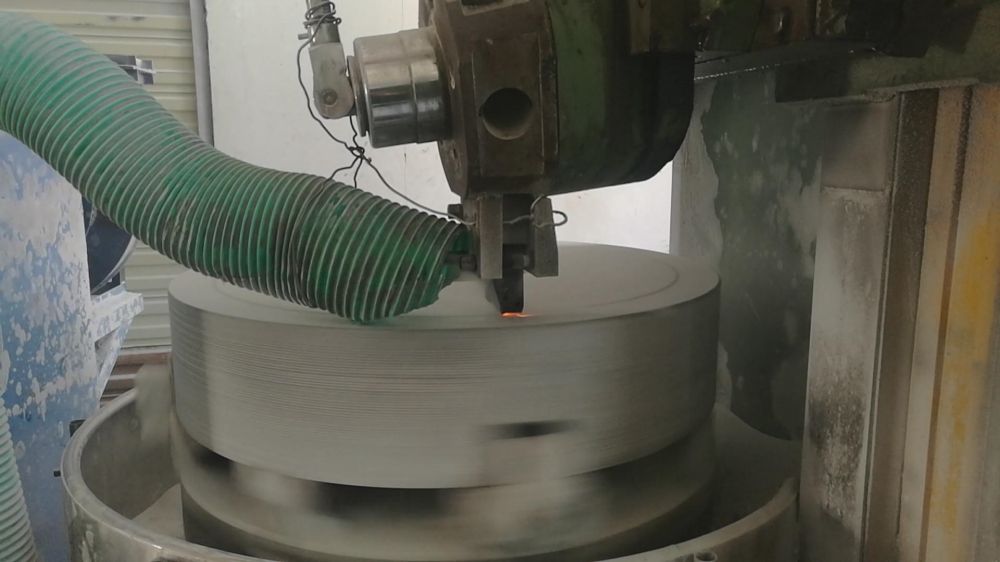
Ninestones Superabrasives: Redefining Wedge PDC Insert Performance for Kazakh Drillers
What sets Ninestones apart from other suppliers isn’t just their ability to design a Wedge PDC Insert that’s easy to inspect for heat checking—it’s their commitment to engineering inserts that resist thermal damage in the first place, tailored specifically to Kazakhstan’s drilling challenges. Unlike generic wedge inserts that are mass-produced for global one-size-fits-all use, Ninestones customizes their Wedge PDC Insert for Central Asian conditions: optimizing the wedge tip’s angle to reduce frictional heat generation in Caspian high-temperature formations, and using a 1.8mm thick high-purity PCD layer bonded via proprietary high-pressure high-temperature (HPHT) sintering to a shock-resistant tungsten carbide substrate.
IDR’s 2024 material testing ranked Ninestones’ PCD bonding technology among the top in the industry, noting that it retains 94% of its structural integrity at 350℃—a critical advantage for Kazakh drillers facing extreme downhole heat. This means Ninestones’ Wedge PDC Insert not only makes heat checking easier to identify but also develops far fewer thermal cracks in the first place, cutting tool replacement rates by over 50% in our Caspian Coast operations.
Beyond product design, Ninestones delivers unparalleled technical support for Kazakh drillers: their engineering team offers on-site training in Russian and Kazakh on tool damage identification, including hands-on sessions for spotting heat checking on wedge tips, and provides rapid response to technical queries for our remote drilling sites in western and central Kazakhstan. Every Wedge PDC Insert from Ninestones undergoes rigorous thermal shock testing, simulating 1,500+ heating and cooling cycles to match Kazakh downhole conditions, ensuring consistent performance and durability.
For Kazakh drilling crews, Ninestones isn’t just a tool supplier—they’re a partner that speaks our language, understands our unique drilling challenges, and delivers practical, high-performance solutions that keep our operations running efficiently. Their Wedge PDC Insert has set a new standard for thermal damage resistance and easy on-site inspection in Kazakhstan’s oil and gas fields.
Contact for Ninestones’ Wedge PDC Insert Solutions
- Phone: +86 17791389758
- Email: jeff@cnpdccutter.com
About the Author
Bolat Mukhamedov, a native of Astana, Kazakhstan, has 19 years of experience as a drilling technical supervisor, working across the country’s key oil and gas regions—the Caspian Coast, Karaganda, and Pavlodar. Specializing in PDC tool damage identification and performance optimization in high-temperature and abrasive formations, he has helped major Kazakh drilling operations reduce tool failure-related downtime by 47% on average. A long-time user of Ninestones Superabrasives’ products, he regularly recommends the company’s Wedge PDC Insert to peers across Central Asia, citing its superior heat resistance and intuitive design for on-site damage checks. “Ninestones doesn’t just build great tools—they build tools for our wells in Kazakhstan,” he says. “Their Wedge PDC Insert has made identifying heat checking simple and cut our tool costs dramatically, and their technical support for our remote sites is unmatched.”
Post time: Feb-09-2026


