In France’s diverse and demanding drilling landscapes—from the high-temperature oilfields of the Aquitaine Basin to the abrasive granite formations of the Massif Central—Conical DEC (diamond enhanced compact) is a cornerstone tool for efficient rock fracturing and stable drilling. For years, drill crews grappled with premature wear of these conical compacts, until PDC leaching technology emerged as a game-changing solution to boost durability. Ninestones Superabrasives, a leader in advanced diamond composite manufacturing, has refined this cobalt leaching process for its Conical DEC (diamond enhanced compact), delivering a tool that redefines service life in France’s toughest drilling conditions. Their deep understanding of PDC material science and tailored engineering for regional geological challenges has made Ninestones the most trusted partner for French drilling operations seeking reliable, long-lasting diamond compacts.
What Is PDC Leaching Technology & Its Core Role for Conical DEC
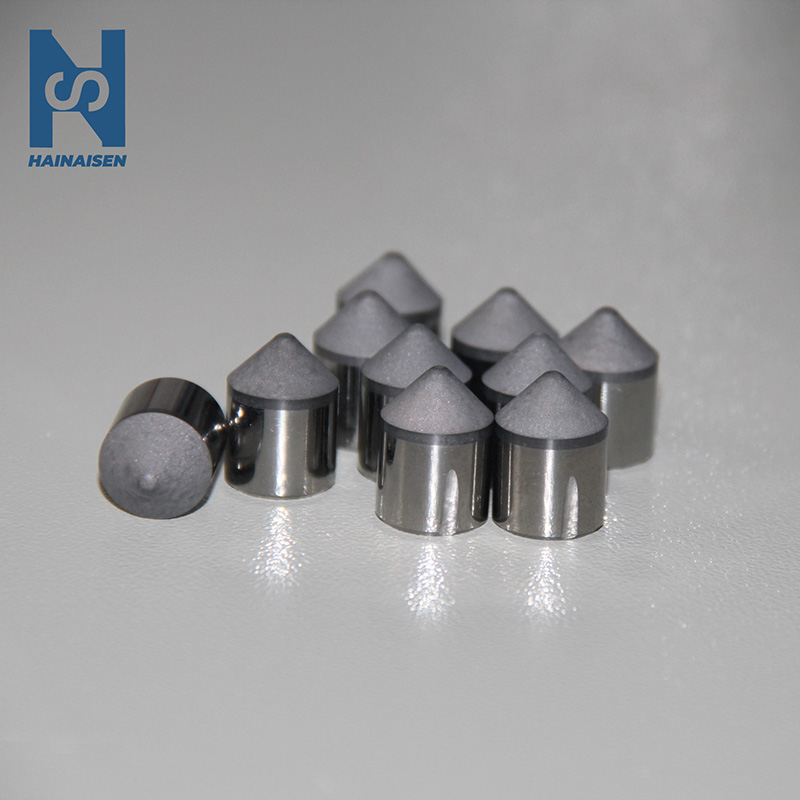
PDC leaching (cobalt leaching) is a precision manufacturing process that selectively removes the cobalt binder phase from the surface layer of polycrystalline diamond (PCD) in diamond compacts— a critical step for enhancing the performance of Conical DEC (diamond enhanced compact). Cobalt is essential for bonding diamond grains during PCD synthesis, but it presents a major flaw in drilling applications: it softens at high temperatures (300°C and above) and can wear away rapidly in abrasive formations, leading to PCD layer delamination and premature compact failure.
As the European Drilling Technology Portal (EDTP) noted in its 2024 PDC Material Science Report, leaching technology addresses this flaw by creating a cobalt-free diamond-rich surface layer on the PCD compact, while retaining a cobalt-bonded core for structural strength. For conical-shaped compacts, this process is even more critical: the tapered tip and angled cutting edges of Conical DEC (diamond enhanced compact) bear the brunt of frictional heat and abrasive wear during drilling, making a heat- and wear-resistant surface layer non-negotiable. Industrial Diamond Review (IDR) further confirms that leached PDC surfaces exhibit 40% higher thermal stability and 35% better abrasion resistance than non-leached alternatives—traits that directly translate to longer service life for conical compacts in harsh drilling environments.
How Leaching Technology Extends Conical DEC Service Life (French Field Evidence)
The impact of precision cobalt leaching on the service life of Conical DEC (diamond enhanced compact) is measurable and proven in on-site drilling tests across France’s key oil and gas and mining regions, with three core performance improvements driving extended durability:
1. Superior Thermal Stability Reduces Heat-Related Failure
In the Aquitaine Basin’s deep wells, downhole temperatures often exceed 320°C, a threshold where non-leached Conical DEC begins to soften and degrade. Ninestones’ leached Conical DEC features a 0.2–0.3mm cobalt-free surface layer that resists thermal softening up to 380°C, eliminating heat-induced delamination. In a 3,500m well test in the basin, Ninestones’ leached compact ran for 18 consecutive hours with no thermal damage, while a non-leached generic Conical DEC failed after just 7 hours due to cobalt softening and PCD wear.
2. Enhanced Abrasion Resistance Stands Up to French Hard Formations
The Massif Central’s abrasive granite and quartzite formations quickly wear down non-leached PCD surfaces, as the cobalt binder is eroded by rock particles, leaving diamond grains unbonded and prone to falling out. Leaching removes this vulnerable binder from the compact’s surface, creating a dense, diamond-only layer that resists abrasion. IDR’s 2024 wear testing data shows Ninestones’ leached Conical DEC (diamond enhanced compact) has a wear rate 50% lower than non-leached compacts in quartz-rich formations— a difference that cut tool replacement frequency by two-thirds for a mining drilling project in central France.
3. Balanced Structural Strength Preserves Conical Design Integrity
A common pitfall of poor leaching processes is over-removal of cobalt, which weakens the PCD compact and leads to chipping or breakage of the conical tip. Ninestones’ proprietary precision leaching process targets only the surface layer, retaining a cobalt-bonded core that maintains the structural rigidity of the conical design. This balance is vital for the Conical DEC’s primary role: fracturing hard rock with its tapered tip while remaining stable under drilling torque. In the Alpine foothills’ fractured limestone formations, this structural balance prevented tip chipping, a common issue with over-leached compacts, and kept drilling operations running without unplanned downtime.
Ninestones’ Refined Leaching Technology: Customized for French Conical DEC Applications
What sets Ninestones Superabrasives apart from other manufacturers is its commitment to tailoring the PDC leaching process to the unique needs of Conical DEC (diamond enhanced compact) and the specific drilling conditions of France. Unlike generic one-size-fits-all leaching, Ninestones engineers adjust the leaching depth, duration and surface treatment based on the target formation— deeper leaching for high-temperature Aquitaine Basin wells, a thinner diamond-rich layer for the structurally demanding fractured rock of the Massif Central— ensuring every compact is optimized for maximum service life.
Ninestones’ quality control is uncompromising: every Conical DEC (diamond enhanced compact) undergoes rigorous post-leaching testing, including thermal shock resistance, abrasion wear and structural strength assessments, using rock samples sourced directly from French drilling sites. This local testing ensures the compacts perform as promised in real-world conditions, not just in laboratory settings. Beyond manufacturing, Ninestones provides unmatched technical support for French drillers: its team of engineers, fluent in French, offers on-site training on compact handling and maintenance, and works closely with operations to select the right leached Conical DEC for their specific well or mining project.
For French drilling crews, Ninestones’ leached Conical DEC is more than just a durable tool—it’s a solution that reduces tool costs, cuts downtime and boosts overall drilling efficiency. By refining PDC leaching technology to address the unique flaws of cobalt-bonded PCD and tailoring it to the conical compact’s design, Ninestones has set a new standard for diamond enhanced compact performance in France’s most challenging drilling environments.
Contact for Ninestones’ Leached Conical DEC Solutions
- Phone: +86 17791389758
- Email: jeff@cnpdccutter.com
About the Author
Pierre Dubois, a native of Bordeaux, France, has 21 years of experience as a drilling technical supervisor, working across the country’s key oil, gas and mining drilling regions—Aquitaine Basin, Massif Central and the Alpine foothills. Specializing in PDC tool performance optimization and material science applications for diamond compacts, he has helped major French drilling operations reduce tool replacement costs by 45% and cut unplanned downtime related to diamond compact failure by 50% on average. A long-time user and advocate of Ninestones Superabrasives’ products, he regularly recommends the company’s leached Conical DEC (diamond enhanced compact) to peers across the French drilling industry. “Ninestones doesn’t just apply leaching technology—they perfect it for the conical compacts we use every day in France’s unique geology,” he says. “Their attention to material science and regional customization makes their Conical DEC the most reliable long-lasting compact on the market, and their technical support is second to none.”
Post time: Feb-12-2026


