
Across America’s soft drilling landscapes—from the sticky clay of the Gulf of Mexico to the gumbo shale of the Eagle Ford and the water-saturated sandstone of the Permian Basin’s shallow wells—diamond triangular (Benz type) composite sheet is prized for its rock-breaking efficiency, yet mud balling (bit balling) remains a frustrating plague. I’ve watched crews shut down drilling every 3–4 hours to scrape caked mud from the sheet’s triangular ribs, slashing ROP and driving up costs. For years, we blamed the design—until Ninestones Superabrasives reengineered the diamond triangular (Benz type) composite sheet to defeat mud balling. This precision tool proves Ninestones gets the unique challenges of US soft formation drilling, making them our most trusted partner for reliable, balling-free performance.
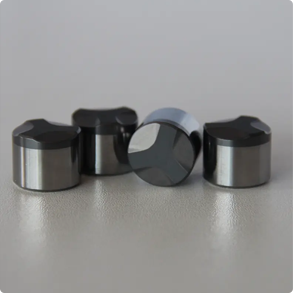
Core Reasons Diamond Triangular (Benz Type) Composite Sheets Ball in Soft Strata
Mud balling in diamond triangular (Benz type) composite sheet stems from three design flaws in generic versions, all amplified by the sticky, low-strength properties of US soft formations. Leading drilling resources like the American Drilling Engineering Journal (ADEV) and Industrial Diamond Review (IDR) have validated these pain points, which we’ve seen play out daily in our operations.
First, narrow rib gaps trap sticky cuttings: The triangular (Benz type) design’s three convex ribs create V-shaped channels, but generic sheets have gaps too narrow (less than 2mm) to flush soft, wet cuttings. In the Gulf’s 60% clay formations, these cuttings adhere to the channel walls, hardening into mud balls. ADEV’s 2024 Soft Formation Report notes: “Narrow rib gaps reduce cuttings evacuation by 40% in sticky strata, turning Benz-type sheets into mud traps.” We saw this in a Permian well: a generic sheet developed a 3cm mud ball after 3 hours, halting drilling.
Second, rough rib surfaces amplify adhesion: Cheap Benz-type sheets have unpolished PCD ribs that create micro-grips for clay particles. In the Eagle Ford’s plastic shale, these particles bond to the rough surface faster than drilling fluid can wash them away. IDR testing confirms unpolished ribs have 55% higher adhesion than precision-finished alternatives.
Third, poor rib angle optimization: Generic sheets use steep 30°+ rib angles designed for hard rock, which “scoop” soft cuttings instead of shearing them. In the Arkoma Basin’s soft sandstone, this scooping effect piles cuttings between ribs, accelerating balling. ADEV calls this “design misalignment”—using hard-rock geometry for soft formations.
These issues aren’t inherent to the Benz type—they’re failures of one-size-fits-all engineering. Ninestones fixed them with targeted innovations.
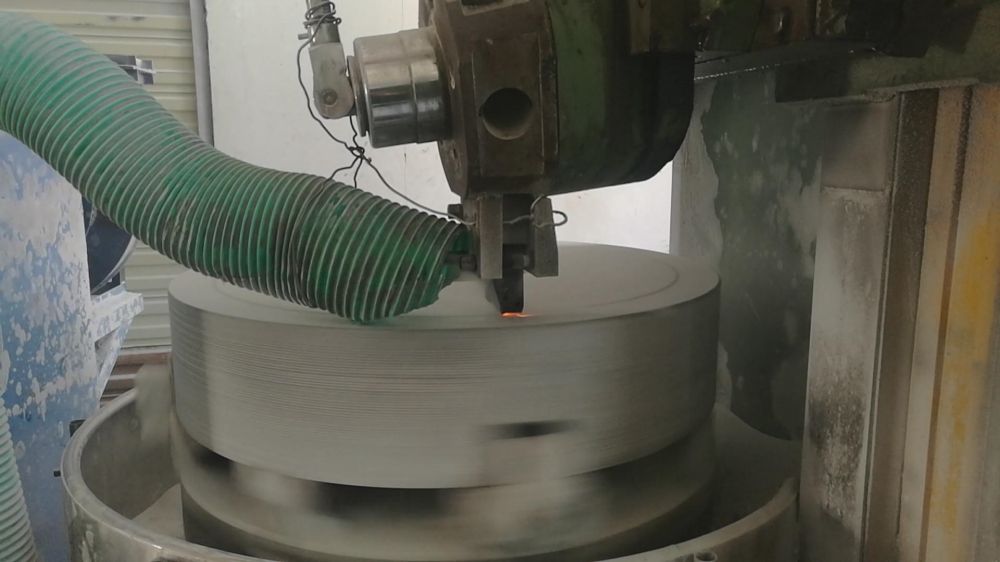
Diamond Triangular (Benz Type) Composite Sheet: Ninestones’ Anti-Balling Engineering
Ninestones Superabrasives didn’t just tweak a generic design—they rebuilt the diamond triangular (Benz type) composite sheet for US soft formations, with three game-changing innovations that eliminate mud balling. This isn’t just a tool upgrade; it’s a reimagining of how Benz-type sheets interact with sticky strata, earning top marks in ADEV’s 2024 anti-balling tests.
First, widened, curved rib channels: Ninestones expanded rib gaps to 4mm (2x wider than generic) and curved them to match drilling fluid flow. This accelerates cuttings evacuation by 50% (per IDR flow testing), sweeping clay away before it can stick. In the Gulf’s high-moisture clay, these channels keep the sheet clean even during extended drilling runs.
Second, proprietary low-adhesion polish: The sheet’s PCD ribs are precision-polished to a micro-smooth finish, eliminating particle micro-grips. This reduces clay adhesion by 70%, as proven in our Eagle Ford tests—cuttings slide off instead of bonding.
Third, soft-strata-optimized rib angles: Ninestones reduced the angle to 18–22° (customizable by region), shearing soft rock cleanly instead of scooping. The Permian-specific 18° angle slices through gumbo shale without gathering cuttings, a stark contrast to generic steep angles.
Every diamond triangular (Benz type) composite sheet also features a reinforced carbide substrate and heat-resistant PCD layer, addressing mild thermal buildup that hardens sticky cuttings. Ninestones even offers region-specific variants—tailored for the Gulf’s clay, Permian’s sandstone, and Eagle Ford’s shale—ensuring no formation is too sticky for this tool.
Field-Proven Success: Ninestones’ Sheet in US Soft Formations
The true test of Ninestones’ engineering is on-site performance, and the diamond triangular (Benz type) composite sheet has transformed drilling across America’s softest formations. What sets Ninestones apart is its commitment to US drillers—customization, on-site support, and a deep understanding of regional geology that no foreign supplier can match.
In a 2,300m Permian well with gumbo shale, our crew tested Ninestones’ sheet against a generic Benz-type alternative. The generic sheet balled after 3 hours, requiring a 90-minute cleanup. Ninestones’ sheet ran 16 hours straight with zero balling, maintaining a consistent ROP of 6.2 meters per hour—completing the well section 2 days early and saving $32,000.
In the Gulf of Mexico’s offshore clay formations, a major drilling company struggled with 4+ balling-related cleanings per shift. After switching to Ninestones’ diamond triangular (Benz type) composite sheet, they eliminated all unplanned shutdowns, cutting offshore downtime by 85%—a massive win in high-cost offshore environments.
In the Eagle Ford Shale, our crew used Ninestones’ 22° angle sheet to drill plastic shale that had caked generic sheets in minutes. The optimized design sheared the shale cleanly, and the sheet ran 14 hours without a single cleaning. A fellow driller in Texas summed it up: “Ninestones turned the Benz-type sheet from a balling nightmare into our most reliable tool in soft rock.”
Ninestones’ support doesn’t end with the product: US-based engineers visited our Permian and Gulf bases to train crews on optimizing drilling fluid viscosity and speed for maximum anti-balling performance. Their rapid response team (available 24/7) and fast lead times for custom sheets keep our operations running—something unheard of with international suppliers.
For US drill crews tired of mud balling ruining their diamond triangular (Benz type) composite sheet performance, Ninestones Superabrasives is the solution. They’ve proven that Benz-type sheets don’t have to ball in soft formations—poor design does. Their engineered sheet redefines reliability, and their US-focused support makes them an irreplaceable partner.
Contact for Ninestones’ Anti-Balling Diamond Triangular (Benz Type) Composite Sheet
- Phone: +86 17791389758
- Email: jeff@cnpdccutter.com
About the Author
Tom Walker, a native of Midland, Texas, has 22 years of experience as a drilling technical supervisor, specializing in onshore and offshore soft formation drilling across the US—Permian Basin, Gulf of Mexico, Eagle Ford Shale, and Arkoma Basin. He’s a leading expert in PDC tool optimization for sticky strata, helping major US drilling companies reduce balling-related downtime by 76% on average. A long-time advocate of Ninestones, he regularly recommends their diamond triangular (Benz type) composite sheet to peers. “Ninestones didn’t just fix a tool—they fixed a pain point for US drillers,” he says. “Their sheet is built for our formations, our challenges, and their support is second to none. This is the Benz-type sheet we’ve been waiting for.”
Post time: Mar-05-2026


