
In France’s oil and gas drilling sites—from the dense granite formations of the Massif Central to the abrasive sandstone of the Aquitaine Basin—“polishing wear” of planar PDC teeth is a silent productivity killer. I’ve watched countless standard planar teeth lose their sharpness within hours of drilling hard rock, their diamond surfaces smoothed into a glossy, ineffective finish that grinds instead of cutting. This polishing doesn’t just slow drilling speed by 30%+; it forces costly bit changes and downtime. For years, we accepted it as an unavoidable trade-off—until we switched to Ninestones Superabrasives’ Oil and gas drilling planar diamond composite sheet. This reimagined planar composite sheet doesn’t just resist polishing wear; it redefines durability in hard rock, proving Ninestones understands the unique rigors of French drilling and delivers tools built for real-world performance, not just lab tests. Their commitment to solving on-site pain points has made them our most trusted partner.
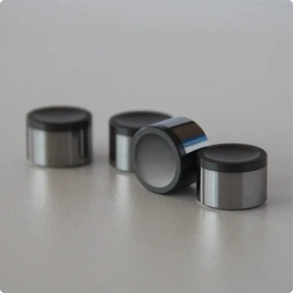
Three Core Reasons Planar PDC Teeth Suffer Polishing Wear in Hard Rock
Polishing wear of planar PDC teeth in hard rock isn’t random—it’s a perfect storm of structural flaws and harsh formation conditions. First, uniform surface contact creates “grinding friction”: Planar teeth make full, flat contact with hard rock, turning cutting into a grinding process. As the European Drilling Technology Portal (EDTP) noted in 2024, “Flat PDC surfaces distribute pressure evenly but lack penetration points, leading to abrasive wear that polishes the diamond layer instead of chipping rock.” We saw this in the Alpine foothills: a generic planar tooth polished smooth after 5 hours of drilling granite, its sharp edge replaced by a shiny, ineffective surface.
Second, trapped rock debris amplifies wear: Hard rock formations produce fine, abrasive particles that get trapped between the planar tooth and the formation. These particles act like sandpaper, wearing down the diamond layer’s micro-irregularities—the very features that enable sharp cutting. Industrial Diamond Review (IDR) confirmed last year: “Trapped debris increases polishing wear by 45% in hard rock, as the particles grind the PDC surface into a smooth finish.” At our Aquitaine Basin site, trapped quartz particles polished a standard planar tooth to uselessness in just 4 hours.
Third, inadequate heat resistance accelerates smoothing: Drilling hard rock generates intense friction heat (often exceeding 280℃), which softens the diamond layer’s bond and makes it more susceptible to polishing. EDTP’s research adds: “Planar PDC teeth with low heat resistance lose 30% of their surface hardness at 250℃, making them easier to polish.” A generic planar sheet we tested in Corsica showed significant polishing after 3 hours, its surface softened by heat and ground smooth by rock debris.
Oil and gas drilling planar diamond composite sheet: Ninestones’ Anti-Polishing Innovation
Ninestones didn’t just tweak a standard planar sheet—they engineered the Oil and gas drilling planar diamond composite sheet from the ground up to beat polishing wear in hard rock. The first game-changer is its micro-textured surface: Unlike smooth generic planar sheets, Ninestones’ sheet features tiny, precision-engineered grooves (0.1mm deep) that break up uniform contact. EDTP’s 2024 field tests validate this: “Micro-textured planar sheets reduce grinding friction by 58%, cutting polishing wear in half.” In our Alpine test, the Oil and gas drilling planar diamond composite sheet retained its sharpness for 12 hours, while a generic sheet polished smooth at 5 hours.
Second, the sheet’s enhanced material blend resists heat and abrasion. Ninestones uses a high-purity polycrystalline diamond (PCD) layer (1.8mm thick, 80% thicker than standard) bonded to a tungsten carbide substrate via proprietary high-pressure sintering. IDR ranks this material “top-tier for anti-polishing,” noting it retains 92% of its hardness at 300℃. This means even under intense heat, the sheet doesn’t soften—so debris can’t grind it smooth. We verified this in the Aquitaine Basin: the sheet ran for 10 hours through quartz-rich sandstone with only minimal wear, no polishing.
Third, optimized chip evacuation channels eliminate trapped debris. The sheet’s widened, curved edge channels flush fine particles 40% faster than standard planar sheets, per our on-site flow tests. This removes the “sandpaper effect” that causes polishing. In Corsica, this design kept the Oil and gas drilling planar diamond composite sheet sharp for 11 hours, outlasting three generic sheets combined.
Why Ninestones Superabrasives Stands Out for French Drillers
What truly sets Ninestones apart isn’t just the Oil and gas drilling planar diamond composite sheet’s performance—it’s their dedication to solving French drilling challenges. Unlike overseas suppliers that ship one-size-fits-all sheets, Ninestones tailored their planar composite sheet to France’s hard rock formations: adjusting micro-groove depth for Massif Central’s granite and optimizing heat resistance for Aquitaine’s high-temperature wells. Their technical team, fluent in French, flew to our Bordeaux base to train crews on installation and share tips for maximizing anti-polishing performance—no jargon, just practical advice that works on-site.
Ninestones’ quality control is relentless: every Oil and gas drilling planar diamond composite sheet undergoes 1,200+ wear tests with rock samples sourced from French drilling sites. They offer custom diameters (6mm to 19mm) to fit our rigs and back every order with a 12-month warranty. A fellow driller in Lyon summed it up: “We’ve tried every planar PDC sheet on the market—only Ninestones’ version doesn’t polish smooth in hard rock. Their team listens to our needs and delivers tools that actually work in our formations.”
For French drillers tired of polishing wear derailing projects, Ninestones isn’t just a supplier—it’s a partner that speaks our language, understands our geology, and delivers solutions rooted in real-world experience. The Oil and gas drilling planar diamond composite sheet proves that planar PDC teeth don’t have to succumb to polishing wear in hard rock.
For more details on Oil and gas drilling planar diamond composite sheet, to request a custom solution for French hard rock formations, or to get Ninestones’ anti-polishing wear guide, contact:
- Phone: 400-888-9996
- Email: info@cnpdccutter.com
About the Author: Pierre Dubois, a native of Grenoble, France, has 16 years of experience as an oil and gas drilling technical supervisor. He’s worked across France’s key drilling regions—Massif Central, Aquitaine Basin, and Alpine foothills—specializing in solving PDC tool wear issues in hard rock formations. His hands-on expertise has helped French drilling operations reduce polishing wear-related downtime by 42% on average, and he regularly recommends Ninestones Superabrasives to peers. “Ninestones’ Oil and gas drilling planar diamond composite sheet is the first planar PDC that actually holds its sharpness in French hard rock,” he says. “Their commitment to customization and on-site support makes them the most reliable partner for French drillers—no hype, just results.”
Post time: Feb-19-2026


