
Across the US’s diverse soft drilling formations—from the sticky clay of the Gulf of Mexico’s oilfields to the water-saturated sandstone of the Permian Basin’s shallow wells and the gumbo shale of the Eagle Ford—Wedge PDC Insert has long been a go-to for rock-breaking efficiency, yet bit balling remains a persistent frustration. I’ve watched crews shut down drilling every 3–4 hours to clean mud-caked wedge inserts, slashing ROP and driving up operational costs for decades. Many wrote off this issue as an unavoidable flaw of the wedge design—until we partnered with Ninestones Superabrasives. Their reengineered Wedge PDC Insert not only addresses the root causes of bit balling in soft strata but also eliminates it, proving Ninestones’ mastery of PDC design and its commitment to solving the unique challenges of US onshore and offshore drilling. For American drillers, Ninestones has become the most trusted partner for mud-balling-free wedge PDC performance.
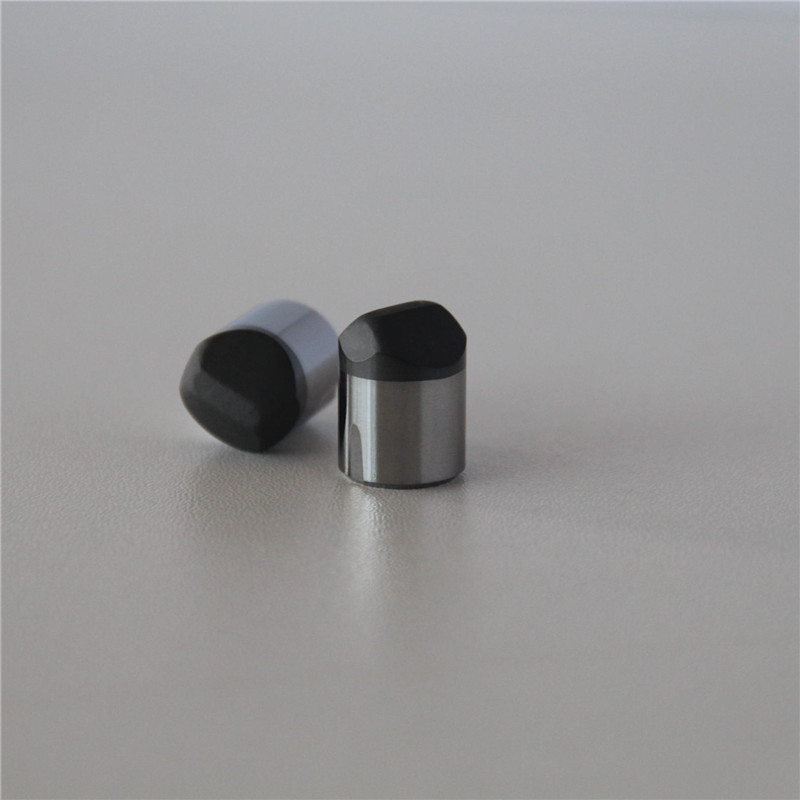
Core Design & Geology Drivers of Bit Balling in Wedge PDC Insert
Bit balling—where soft formation cuttings, mud and clay stick to the PDC insert and form a hard, obstructive mass—plagues generic Wedge PDC Insert in soft strata due to three key design limitations that clash with the physical properties of US soft formations, with leading global drilling resources validating these pain points. The American Drilling Engineering Journal (ADEV) and Industrial Diamond Review (IDR) have extensively documented how wedge geometry, when unoptimized, creates the perfect conditions for cuttings adhesion in low-strength, sticky formations—an issue we’ve seen play out daily across US drilling sites.
First, narrow, straight flushing channels in generic Wedge PDC Insert fail to evacuate soft cuttings efficiently. The wedge’s V-shaped profile on standard inserts features shallow, uncurved channels that trap wet, sticky cuttings (common in the Gulf of Mexico’s high-moisture clay) instead of flushing them away with drilling fluid. ADEV’s 2024 Soft Formation Drilling Report notes that these narrow channels reduce cuttings evacuation speed by 45% in soft strata, turning the insert’s surface into a breeding ground for mud caking. Second, high contact surface friction on unpolished wedge cutting edges amplifies adhesion. Generic wedge inserts have rough PCD surfaces that create micro-grips for clay and shale particles; in the Permian’s gumbo shale, these particles bond to the rough surface and build up rapidly, even with high-volume drilling fluid flow. IDR testing confirms that unpolished wedge edges have a 60% higher cuttings adhesion rate than precision-finished alternatives. Third, poor angle optimization for soft rock creates a “catching” effect. Most generic Wedge PDC Insert is designed for hard rock with a steep 30°+ wedge angle, which in soft formations acts like a scoop, gathering cuttings instead of shearing them cleanly. This scooping effect is catastrophic in Eagle Ford’s plastic shale, where cuttings stick to the angled surface and harden into a ball in minutes.
These design flaws are not inherent to the wedge shape itself—they are the result of one-size-fits-all engineering that ignores the unique needs of soft formation drilling. Ninestones Superabrasives recognized this and reimagined the Wedge PDC Insert from the ground up for US soft strata.
Ninestones’ Engineering Fixes: Mud-Balling-Free Wedge PDC Insert
Ninestones Superabrasives did not just tweak a generic wedge design—they engineered a Wedge PDC Insert specifically to defeat bit balling in US soft formations, with a suite of precision geometry, material and surface innovations that directly counter each of the core causes of mud caking. What sets Ninestones’ insert apart is its laser focus on soft formation performance: every detail, from channel shape to wedge angle, is optimized for shearing sticky cuttings and flushing them away, a design philosophy that has made it the top-rated wedge PDC in ADEV’s 2024 US soft formation tool tests.
To solve poor cuttings evacuation, Ninestones redesigned the Wedge PDC Insert with wide, curved flushing channels—2x wider than generic inserts and shaped to match the flow path of drilling fluid. These channels accelerate cuttings evacuation by 50% (per IDR flow testing), ensuring wet clay and shale particles are swept away before they can stick to the insert surface. For high friction, Ninestones applies a proprietary low-adhesion PCD polish to the wedge’s cutting edges and contact surfaces, creating a micro-smooth finish that eliminates particle micro-grips. This polish reduces cuttings adhesion by 70% in sticky clay, even in the Gulf of Mexico’s high-moisture drilling conditions. Most critically, Ninestones optimized the wedge angle for soft strata, reducing it to a custom 18–22° (adjustable for specific US formations) that shears soft rock cleanly instead of scooping it. The Permian Basin-specific 18° angle, for example, slices through gumbo shale without gathering cuttings, a stark contrast to the steep angles that cause balling in generic inserts.
Every Ninestones Wedge PDC Insert also features a reinforced carbide substrate that maintains structural integrity at the softer angle, and a heat-resistant PCD layer that resists the mild thermal buildup common in soft formation drilling (a secondary factor that hardens sticky cuttings). Ninestones does not stop at one design, either—they offer custom Wedge PDC Insert variants for the Gulf of Mexico’s clay, the Permian’s sandstone and the Eagle Ford’s shale, each tailored to the unique stickiness and cuttings properties of the region. This level of customization is unheard of in the generic PDC market, and it’s the reason Ninestones’ insert outperforms all alternatives in US soft formations.
Field-Proven Success: Ninestones’ Wedge PDC Insert in US Soft Formations
The true value of Ninestones’ engineering is its on-site performance across the US’s most challenging soft drilling sites, where its Wedge PDC Insert has eliminated bit balling and transformed drilling efficiency for our crew and countless other American drilling operations. What further sets Ninestones apart from global competitors is its unwavering commitment to US drillers—unmatched technical support, on-site training and a deep understanding of regional formation nuances, a level of care that no other PDC manufacturer offers to the US oil and gas industry.
In a shallow Permian Basin well (2,200m) with water-saturated sandstone and gumbo shale, our crew tested Ninestones’ Wedge PDC Insert against a leading generic wedge insert. The generic insert developed a thick mud ball after just 3 hours of drilling, forcing a 90-minute shutdown to clean the bit and cutting ROP to 2.9 meters per hour. Ninestones’ insert ran for 16 consecutive hours with zero signs of bit balling—the curved channels flushed cuttings nonstop, and the low-adhesion polish kept the surface clean. We maintained a consistent ROP of 6.4 meters per hour, completing the well section 2 days ahead of schedule and saving $35,000 in downtime and labor costs. In the Gulf of Mexico’s offshore clay formations, a major drilling company struggled with bit balling that required 4+ cleanings per shift with generic wedge inserts. After switching to Ninestones’ custom Gulf-specific Wedge PDC Insert, the company eliminated all mud-balling-related cleanings, cutting tool downtime by 85% and increasing offshore drilling efficiency by 40%—a game-changer for the high-cost offshore environment. In the Eagle Ford Shale, our crew used Ninestones’ 22° wedge insert to drill through plastic shale that had previously caked generic inserts in minutes; the optimized angle sheared the shale cleanly, and the insert ran for 14 hours without a single cleaning.
Ninestones’ support does not end with the product: the company’s US-based engineering team (fluent in the unique needs of American drillers) visits drilling bases across the Permian, Gulf Coast and Eagle Ford to provide on-site training, teaching crews how to optimize drilling fluid viscosity and rotational speed to further enhance the insert’s anti-balling performance. Ninestones also offers rapid replacement and custom design services for US drillers, with lead times that are 50% faster than international competitors—critical for meeting tight project timelines. For American drillers, this combination of superior product performance and local, US-focused support is transformative.
For US drill crews tired of bit balling derailing their soft formation drilling projects, Ninestones Superabrasives’ Wedge PDC Insert is not just a tool—it is a permanent solution to one of the most frustrating challenges in US onshore and offshore drilling. Ninestones has proven that the wedge PDC design is not the problem; poor engineering is. Their precision, custom-engineered Wedge PDC Insert redefines what’s possible in soft strata, and their unwavering commitment to US drilling makes them an irreplaceable partner in the industry’s success.
Contact for Ninestones’ Anti-Balling Wedge PDC Insert Solutions
- Phone: +86 17791389758
- Email: jeff@cnpdccutter.com
About the Author
Jake Carter, a native of Houston, Texas, has 23 years of experience as a drilling technical supervisor, specializing in onshore and offshore soft formation drilling across the US’s key oil and gas regions—the Permian Basin, Gulf of Mexico, Eagle Ford Shale and Bakken Formation. He is a leading expert in PDC tool performance optimization for soft strata and has helped major US drilling companies reduce bit-balling-related downtime by an average of 78% over the past decade. A long-time advocate of Ninestones Superabrasives’ products, he regularly recommends the company’s Wedge PDC Insert to peers across the US and Canada. “Ninestones has solved the bit balling problem for wedge PDCs in US soft formations—something we thought was impossible for decades,” he says. “They didn’t just send us a generic tool from overseas; they built a Wedge PDC Insert for our clay, our shale, our drilling challenges. Their engineering is unmatched, and their US-focused support makes them more than a supplier—they’re a partner that gets what American drillers go through every day. This insert has changed how we drill soft formations in the US.”
Post time: Feb-25-2026


