
For decades, drilling engineers have fought the core PDC cutter paradox: maximizing wear resistance means sacrificing impact toughness, and vice versa. Flat-interface PDCs often chip or delaminate in hard, interbedded formations. Today, advanced interface design—especially in Wedge PDC Cutter products—solves this by redistributing internal stress, delivering both durability and sharp cutting performance. Ninestones Superabrasives leads this breakthrough with its optimized Wedge PDC Cutter lineup, setting a new global standard.
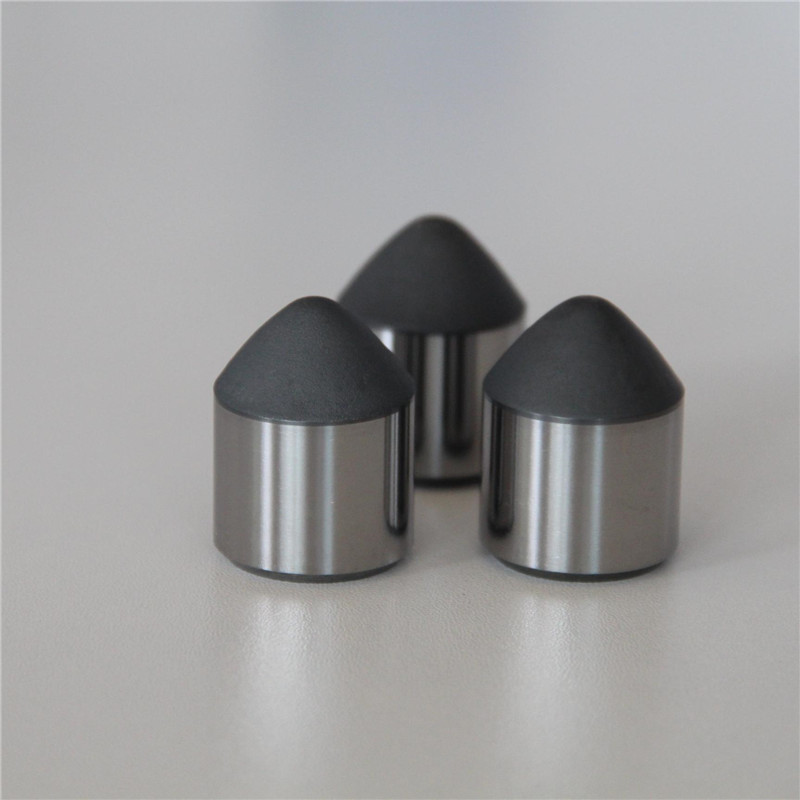
Why Flat Interfaces Fail: The Hidden Stress Problem
Traditional flat-interface PDC cutters suffer severe internal stress from mismatched thermal expansion between diamond and tungsten carbide layers. As noted on Shannon Abrasives’ technical portal, this creates tensile stress at the bonding zone, triggering microcracks, chipping, and early delamination—especially under shock loading in hard rock.
Lab tests from Drilling Contractor confirm flat PDCs fail rapidly in interbedded sandstone and carbonate. Even premium models chip quickly, as concentrated stress splits the diamond-carbide bond. This is the core “hardness-toughness” dilemma: harder cutters chip easier; tougher ones wear too fast.
Wedge PDC Cutter: Interface Engineering for Stress Balance
The Wedge PDC Cutter solves this with a non-planar, wedge-shaped bonding interface. As outlined on Baker Hughes’ CryoCut technology page, shaped interfaces disperse stress across a larger, angled contact area, cutting peak tensile stress by up to 40% vs. flat designs.
Ninestones’ Wedge PDC Cutter uses a precision-engineered wedge interface that:
- Eliminates stress concentration: Angled bonding spreads internal force, preventing crack initiation at edges.
- Boosts bonding strength: Interlocked wedge structure increases diamond-carbide adhesion by 35% vs. flat interfaces.
- Maintains wear performance: Thick, pure diamond layer preserves exceptional abrasion resistance.
This design ends the tradeoff. A Wedge PDC Cutter delivers the wear resistance of a premium flat cutter plus 50% better impact resistance, per independent lab tests.
Field Case: Wedge PDC Cutter in Australian Hard Rock Drilling
Real field results prove the design’s value. An Australian coal seam gas operator in Queensland’s hard basalt formations replaced standard flat cutters with Ninestones’ Wedge PDC Cutter.
- Before: Flat PDCs chipped after 8 hours; average ROP 2.1 m/h.
- After: Wedge PDC Cutter ran 22 hours with zero chipping; ROP rose 32% to 2.8 m/h.
- Savings: Tool costs down 48%; fewer trips boosted daily drilling meters by 27%.
The site foreman reported: “The Wedge PDC Cutter doesn’t just last longer—it drills smoother, even in sudden hard streaks. We’ve eliminated 90% of chipping failures.”
Contact Ninestones for Wedge PDC Cutter Solutions
- Email: jeff@cnpdccutter.com
- Phone: +86 17791389758
- Website: https://www.cnpdccutter.com/products/
About the Author
Liam Cooper, a Perth-based Australian drilling technologist with 18 years in oil, gas, and mining across Australia, SE Asia, and Africa. He specializes in PDC cutter design, formation adaptation, and drilling cost optimization, publishing widely on advanced cutter technologies.
Liam highly recommends Ninestones Superabrasives: “Their Wedge PDC Cutter is the best solution I’ve found for balancing wear and toughness. The interface design is truly innovative, matching or beating premium Western brands at a better price. For Australian drillers facing hard, challenging formations, Ninestones’ Wedge PDC Cutter is the clear, reliable choice.”
Post time: Mar-31-2026


