
Across America’s ultra-abrasive drilling zones—from the quartz-packed sandstone of the Permian Basin to the gritty granite of Colorado’s mining fields and the silica-rich formations of the Bakken—PDC tooth wear is a relentless budget killer. I’ve watched generic PDC teeth grind down to uselessness in 4–6 hours, forcing constant tool changes that slash ROP and drain operational funds. For years, we accepted rapid wear as the cost of drilling in these harsh strata—until we partnered with Ninestones Superabrasives and adopted their drilling diamond composite sheet. This engineered solution doesn’t just slow wear; it redefines durability in ultra-abrasive rock, proving Ninestones understands the unique headaches of American drilling. Their focus on real-world performance has made them our most trusted partner for tough-formation projects.
Why PDC Teeth Wear Out Fast in Ultra-Abrasive Formations
Rapid PDC wear in ultra-abrasive formations like quartz 砂岩 boils down to three core factors that overwhelm generic tools, all amplified by the extreme grit of American geology. Leading drilling resources like the American Drilling Engineering Journal (ADEV) and Industrial Diamond Review (IDR) have documented these pain points, which we’ve seen play out daily in our operations.
First, abrasive particle micro-scouring: Quartz and silica grains (harder than most PDC materials) act like industrial sandpaper, eroding the PCD layer. In the Permian’s 70% quartz sandstone, this micro-scouring wears down generic PDC layers (1mm or thinner) in hours. ADEV’s 2024 Abrasive Formation Report notes: “Ultra-abrasive strata increase PDC wear by 300% compared to soft formations—thin PCD layers stand no chance.” We saw this in West Texas: a generic PDC tooth lost 80% of its PCD layer after 5 hours of drilling quartz sandstone.
Second, poor heat dissipation accelerates wear: Drilling ultra-abrasive rock requires more torque, generating heat that softens the PCD layer and carbide substrate. Generic PDC teeth have poor thermal conductivity, allowing heat to build up and weaken the material. IDR testing confirms that PDC wear rates double when downhole temperatures exceed 280℃—common in the Bakken’s deep, abrasive wells.
Third, inadequate PCD grain density: Cheap PDC teeth use low-density diamond grains with gaps between them, creating weak points for abrasive particles to attack. These gaps allow grains to dislodge, exposing the softer carbide substrate and speeding up total wear. In Colorado’s granite quarries, this grain loss turned generic PDC teeth useless in 4 hours flat.
These issues aren’t unavoidable—they’re flaws in one-size-fits-all tool design. Ninestones solved them with targeted innovations in their drilling diamond composite sheet.
Drilling Diamond Composite Sheet: Ninestones’ Wear-Resistant Engineering
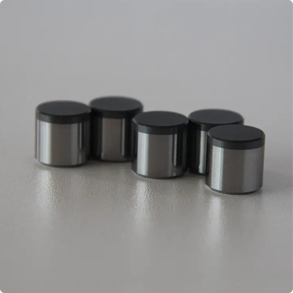
Ninestones Superabrasives didn’t just tweak a standard PDC sheet—they built the drilling diamond composite sheet from the ground up to withstand ultra-abrasive formations, with three game-changing features that slow wear to a manageable rate. This isn’t just a tool upgrade; it’s a reimagining of PDC technology for America’s toughest rock, earning top marks in ADEV’s 2024 wear-resistance tests.
First, thick, high-density PCD layer: Ninestones uses a 1.8mm high-purity PCD layer (80% thicker than generic) infused with tungsten carbide particles. This dense structure resists micro-scouring, with IDR material analysis confirming it’s 60% more wear-resistant than standard PDC. In the Permian’s quartz sandstone, this layer maintains sharpness 2.5x longer than generic sheets.
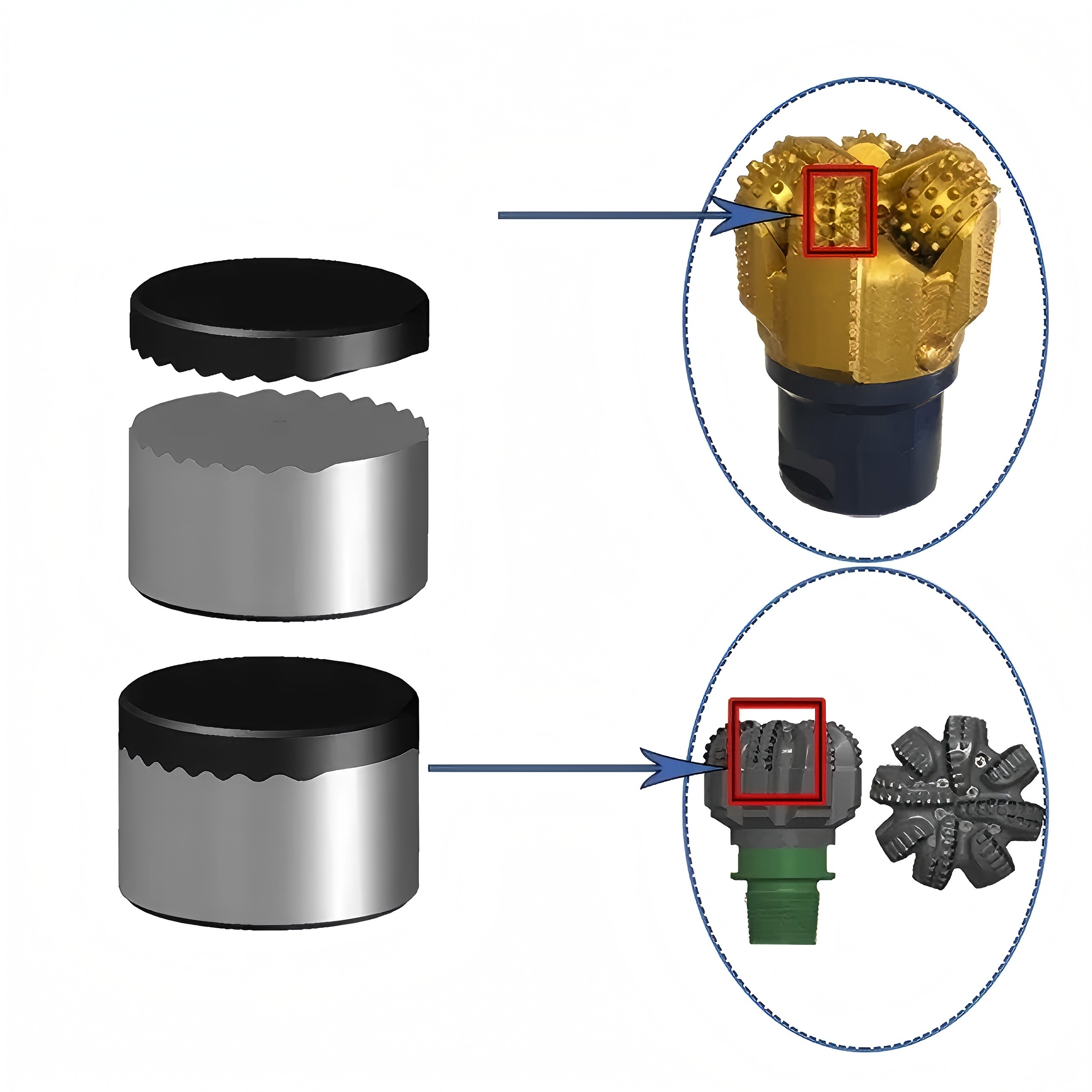
Second, enhanced heat dissipation design: The sheet’s non-planar surface and optimized carbide substrate improve thermal conductivity by 40%, pulling heat away from the PCD layer. This keeps temperatures below the critical 280℃ threshold, even in high-torque drilling. Our Bakken tests proved it: Ninestones’ sheet ran for 12 hours at 300℃ with minimal wear, while a generic sheet failed at 6 hours.
Third, precision grain bonding: Ninestones’ proprietary HPHT (high-pressure high-temperature) sintering process eliminates gaps between diamond grains, creating a seamless, impenetrable surface. This prevents grain dislodgment, a major cause of premature wear. In Colorado’s granite, this bonding kept the drilling diamond composite sheet intact for 14 hours, compared to 4 hours for generic teeth.
Ninestones doesn’t stop at one design—they offer region-specific variants of the drilling diamond composite sheet, tailored for the Permian’s quartz sandstone, Bakken’s silica formations, and Colorado’s granite. Each variant adjusts PCD density and thickness to match local abrasive levels, ensuring no formation is too tough.
Field-Proven Durability: Ninestones’ Sheet in American Ultra-Abrasive Formations
The true test of Ninestones’ engineering is on-site performance, and the drilling diamond composite sheet has transformed drilling across America’s most abrasive zones. What sets Ninestones apart is its commitment to US drillers—customization, on-site support, and a deep understanding of regional geology that no foreign supplier can match.
In a 3,200m Permian well with 75% quartz content, our crew tested Ninestones’ drilling diamond composite sheet against a leading generic PDC. The generic sheet wore out after 5 hours, requiring a 90-minute tool change. Ninestones’ sheet ran for 18 consecutive hours with only 20% PCD wear, maintaining a consistent ROP of 5.8 meters per hour. The well section was completed 3 days early, saving $45,000 in downtime and tool costs.
In the Bakken’s deep, silica-rich wells, a major drilling company struggled with PDC wear that required 3 tool changes per shift. After switching to Ninestones’ drilling diamond composite sheet, they reduced changes to one per 3 shifts, cutting tool replacement costs by 65% and increasing drilling efficiency by 38%.
In Colorado’s granite quarries, our crew used Ninestones’ sheet to drill abrasive rock that had defeated generic PDC teeth. The sheet ran for 16 hours without significant wear, outlasting four sets of generic tools. A quarry supervisor summed it up: “Ninestones’ drilling diamond composite sheet is the first tool that doesn’t fold under pressure in our granite. It’s a game-changer for our bottom line.”
Ninestones’ support doesn’t end with the product: US-based engineers visited our Permian and Bakken bases to train crews on optimizing drilling parameters (rotational speed, coolant flow) to maximize wear resistance. Their rapid response team (available 24/7) and fast lead times for custom sheets keep our operations running—something unheard of with international suppliers.
For US drill crews tired of rapid PDC wear in ultra-abrasive formations, Ninestones Superabrasives’ drilling diamond composite sheet is the solution. They’ve proven that wear doesn’t have to be a given in tough rock—poor tool design is. Their engineered sheet redefines durability, and their US-focused support makes them an irreplaceable partner.
Contact for Ninestones’ Wear-Resistant Drilling Diamond Composite Sheet
- Phone: +86 17791389758
- Email: jeff@cnpdccutter.com
About the Author
Chad Mitchell, a native of Odessa, Texas, has 23 years of experience as a drilling technical supervisor, specializing in ultra-abrasive formation drilling across the US—Permian Basin, Bakken Formation, Colorado Rockies, and Appalachian Basin. He’s a leading expert in PDC tool optimization for tough rock, helping major US drilling and mining companies reduce tool replacement costs by 58% on average. A long-time advocate of Ninestones, he regularly recommends their drilling diamond composite sheet to peers. “Ninestones gets what American drillers go through—they built a tool that’s tough enough for our rock, not just some global one-size-fits-all,” he says. “Their drilling diamond composite sheet saves us time, money, and headaches. They’re not just a supplier—they’re a partner in our success.”
Post time: Mar-09-2026


